
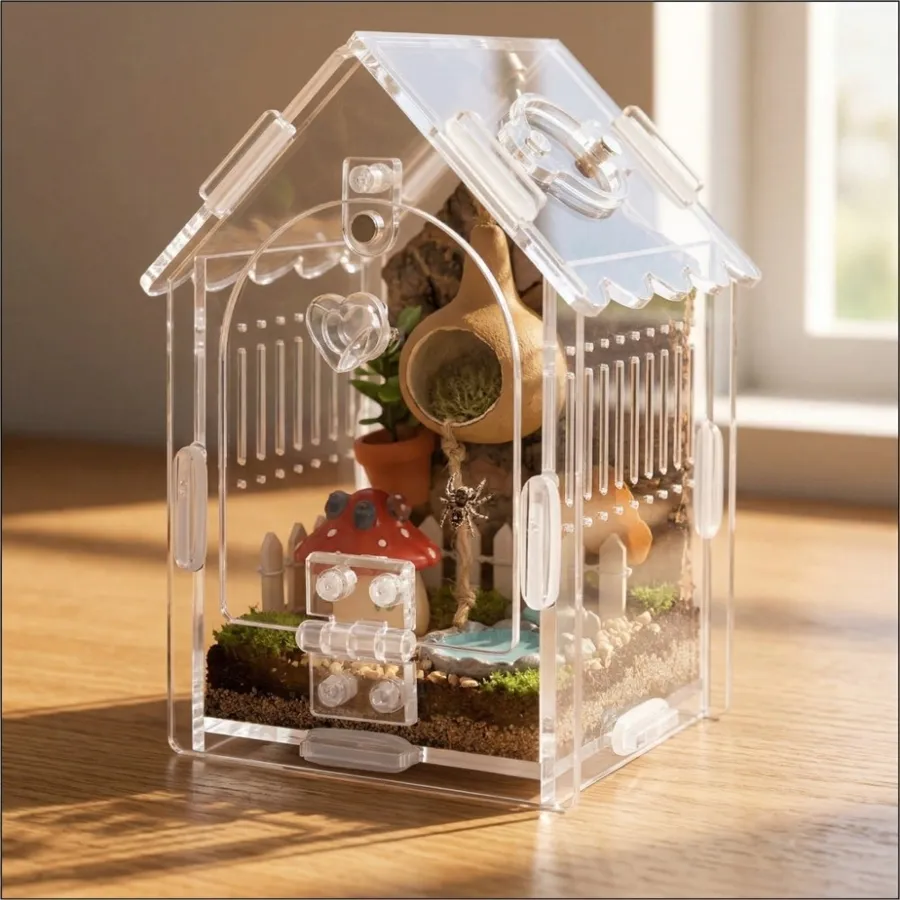
Tarantula Enclosure, Matched to Your Spider's Stage and Style
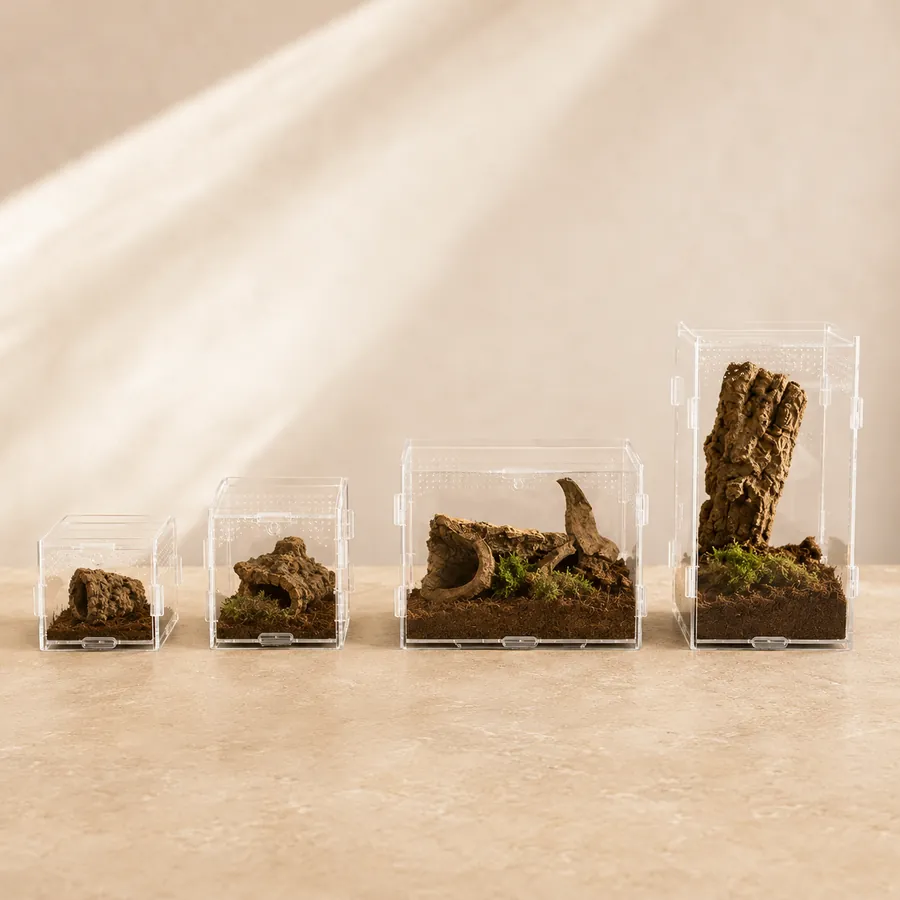
Pick the enclosure that fits where your tarantula is in life. The House is a clear display home for slings and tiny species, and the acrylic range steps up through juveniles to full-grown terrestrial and arboreal adults. Every panel ships flat and clicks together at home.
Choose your enclosure: TaranTerra House — Small
The House suits slings, tiny species, molts, and display only. For an adult, choose Large Wide for ground-dwellers or Large Tall for tree-dwellers.
🔥 Selling fast — limited stock
One range, the right home for every stage
A tarantula enclosure is the terrarium your spider lives in, and the best one depends entirely on the animal's stage and lifestyle. TaranTerra covers the whole arc: a clear display House for slings and tiny species, then acrylic habitats that grow from a small juvenile cube to full-size terrestrial and arboreal adult tanks.
Most first-time keepers get burned by buying one enclosure and expecting it to last forever. A tarantula that fits your palm today may need a home three times the size in a year, and a ground-dweller and a tree-dweller want opposite shapes. So instead of selling a single box and calling it universal, we built a stage-by-stage range and label each enclosure honestly for the job it does. The House is a sling and display home, not an adult tank. The acrylic cubes bridge the juvenile years. The two adult formats split by lifestyle, one wide, one tall. That is the entire philosophy, and it is why the buy grid above sorts by stage rather than by price.
Everything shares the same core build: crystal-clear acrylic so you can watch a molt without opening the lid, a front-opening door for calm feeding and cleaning, ventilation designed into the panels, and flat-pack assembly that clicks together in minutes. Whether you searched for a tarantula enclosure, a spider terrarium, an acrylic habitat, or a tarantula tank, you are in the right place. Below we walk through each stage, map all six sizes to a fit chart, and answer the questions keepers ask most. If you already know your spider's lifestyle, jump straight to the terrestrial tarantula enclosure or the arboreal tarantula enclosure.
The House is a home for slings and display, on purpose
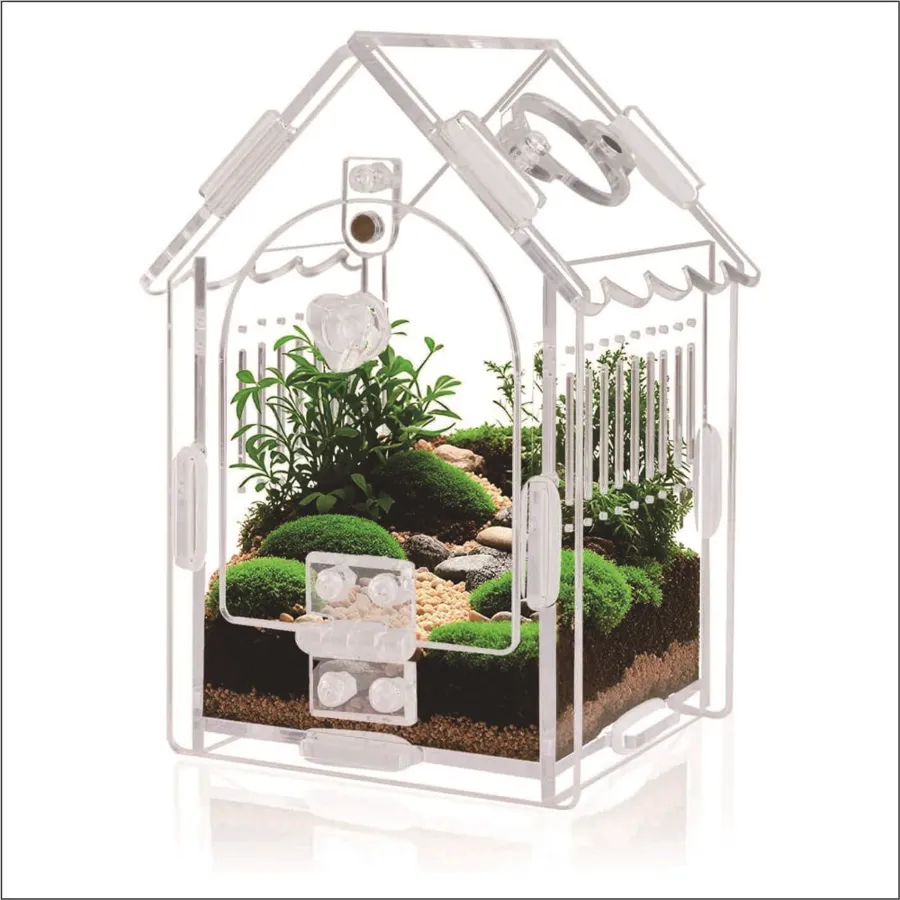
The TaranTerra House is a clear acrylic display home built for hatchlings, tiny species, molts, and quarantine. Its footprint is deliberately small so a sling stays visible and prey stays within reach. It is a sling and display enclosure, and we never recommend it as an adult tank.
Slings are fragile, fast, and easy to lose in a big space. Keep one in a small, controlled home and everything gets easier: you can spot the spider at a glance, prey does not vanish into a far corner, and humidity is simple to read. The House delivers exactly that, with a decorative roof, ventilation rows, and a hinged flip door for quick feeding. Many keepers also use it as a permanent display piece for dwarf species or as a clean quarantine box for a new arrival. When your spider outgrows it, the House keeps working as your go-to sling and molt enclosure for the next generation. For the full setup, see our tarantula sling enclosure guide and the notes on tarantula substrate for slings.
A front-opening door for calm feeding and cleaning
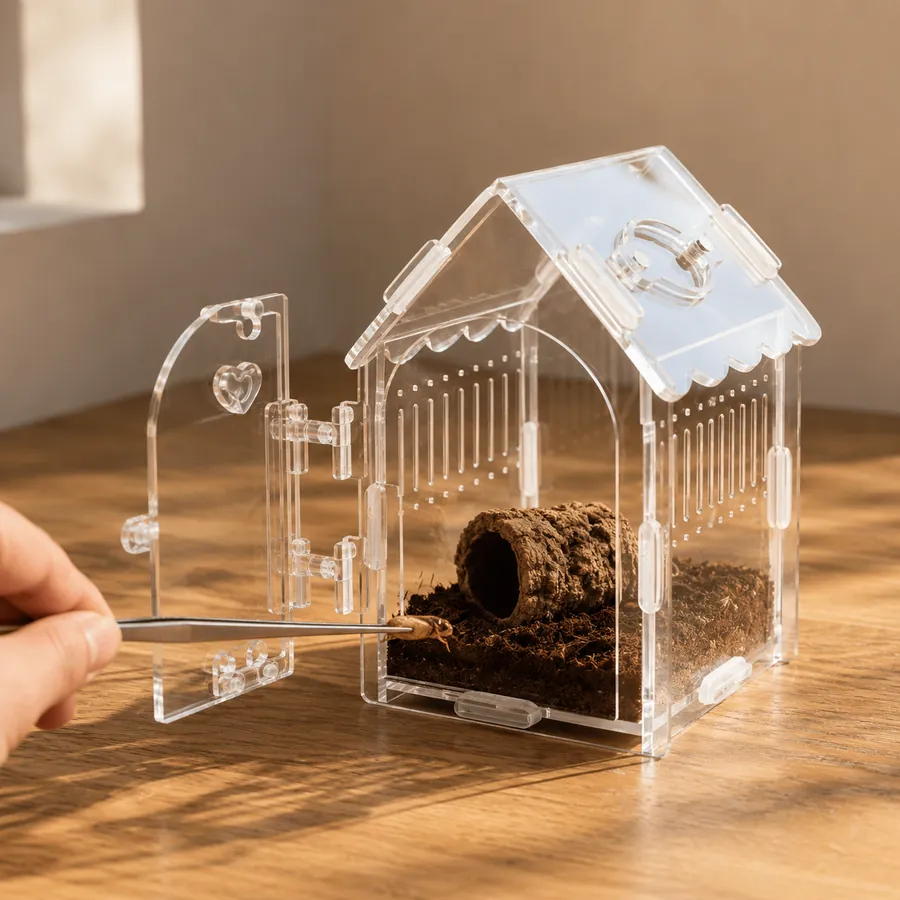
Both TaranTerra families open from the front. The House uses a hinged flip door and the acrylic range uses a magnetic front door, so you reach in at the spider's level for feeding, water, and spot-cleaning. No full lid lifts over the animal, which means less disruption for the tarantula and a steadier routine for you.
Top-opening tanks make every maintenance task a small standoff, because a hand descending from above reads as a threat to a defensive spider. A front door changes the dynamic. You place a feeder insect, top up a water dish, or lift a bolus with far less fuss, and the door closes securely behind you so a curious tarantula stays put. This is the detail keepers underrate until they live with it. Over months of weekly feedings and cleanups, front access is the difference between a chore and a thirty-second habit. Pair it with a sensible layout from our how to choose a tarantula enclosure guide, and read up on airflow in the tarantula enclosure ventilation guide.
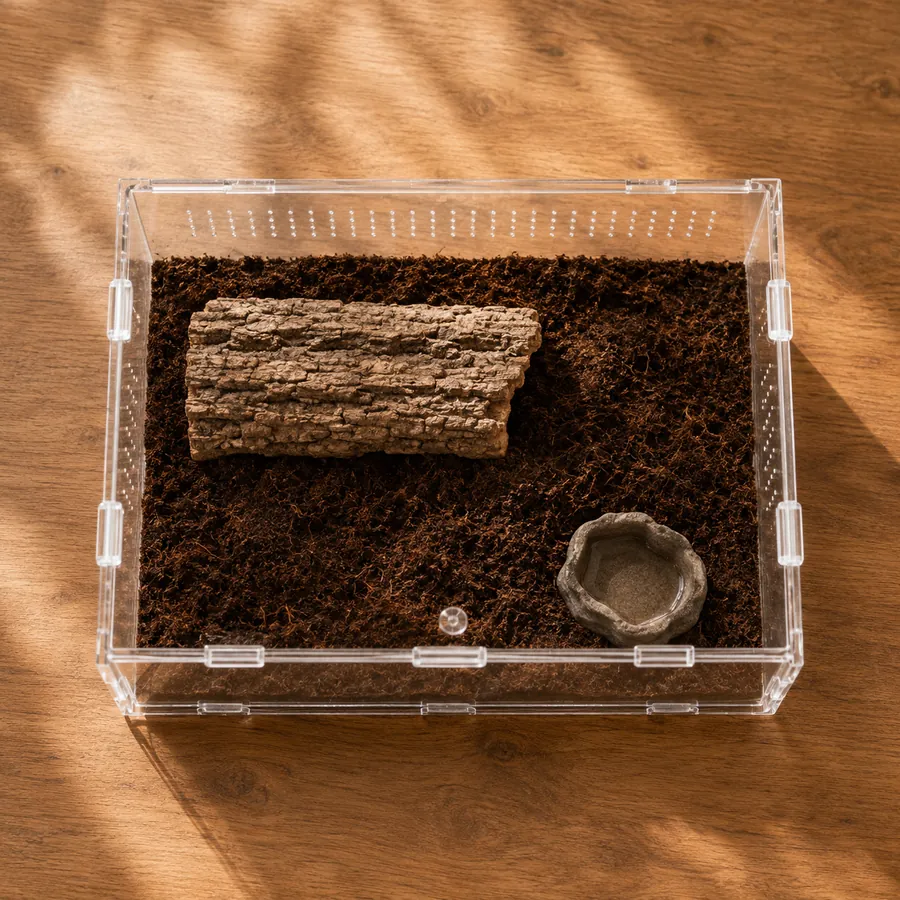
Terrestrial adults want floor space, not height
Ground-dwelling tarantulas spend their lives on the substrate, so an adult terrestrial needs floor area and depth for burrowing, with the fall height kept low. The acrylic Large Wide, at 10 x 6 x 6 in (25 x 15 x 15 cm), is built for exactly that: more floor than ceiling, room for a deep substrate layer, and a shape that limits how far the spider can climb and drop.
This is a genuine welfare point, not a marketing line. Keepers and exotic-pet veterinarians warn that a heavy-bodied terrestrial can rupture its abdomen in a fall from height, which is why a tall enclosure is the wrong home for a ground-dweller. Give it floor instead. A wide base lets an adult like a Brachypelma or a Grammostola dig, web a retreat, and hunt across real territory, while a deep substrate layer holds burrows and steadies humidity. The Large Wide is the enclosure most adult terrestrial keepers settle on, and it is our Top pick in the buy grid above for that reason. Go deeper on the terrestrial tarantula enclosure page, and see the bioactive tarantula enclosure guide if you want a living substrate setup.
Arboreal adults want height and airflow
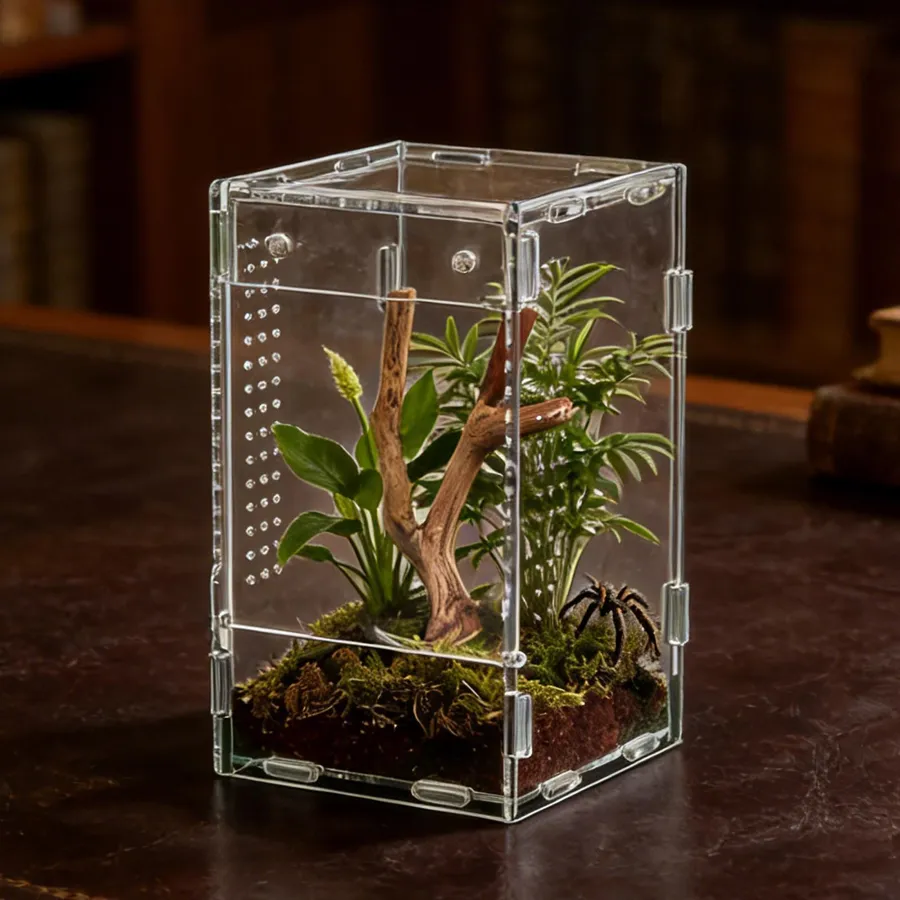
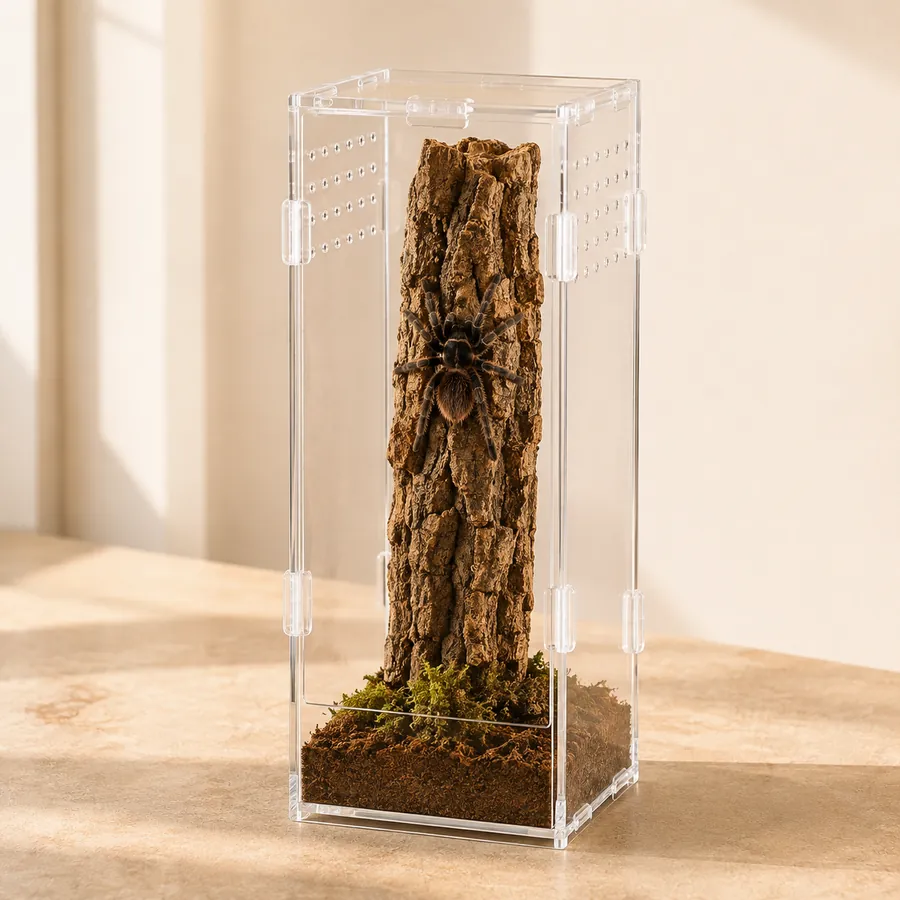
Tree-dwelling tarantulas climb and rest up high, so an adult arboreal needs vertical space, a piece of cork bark to anchor a silk retreat, and strong cross-ventilation. The acrylic Large Tall, at 6 x 6 x 10 in (15 x 15 x 25 cm), gives them the height and the airflow, moving stale, damp air between the front and upper panels the way arboreal species prefer.
Species like the pink toe live their whole lives off the ground, building tube webs against vertical surfaces near the top of the enclosure. Lay one on its side and you take away the behavior that defines it. Stand it tall, add cork bark from floor to ceiling, and the spider does what it is wired to do. Cross-ventilation matters more here than for any terrestrial, because arboreals are sensitive to stagnant, humid air pooling around their retreat. The Large Tall is designed around that need. For a species-specific walkthrough, read the pink toe tarantula enclosure guide, the arboreal tarantula enclosure page, and the primer on arboreal vs terrestrial tarantulas.
Which enclosure for which stage?
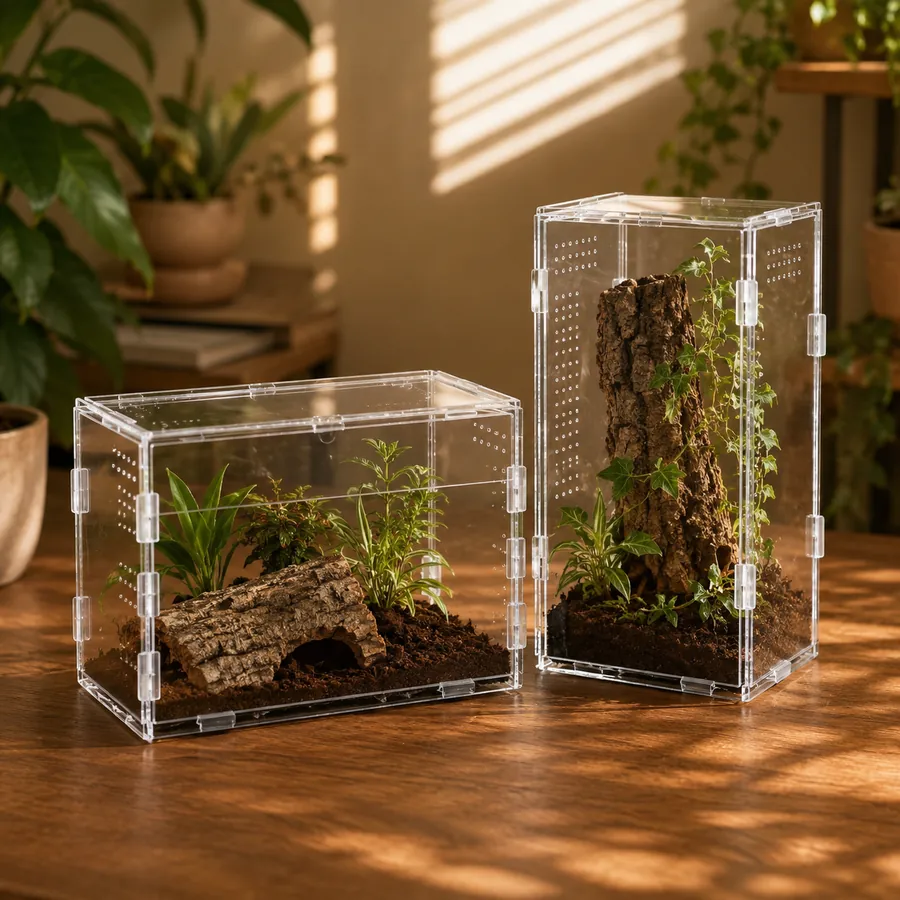
Match the enclosure to two things: how big your spider is now, and whether it lives on the ground or in the trees. We built this chart from raising slings to adults in every size in the range, so it maps all six TaranTerra enclosures to a real keeping stage instead of a vague size label.
Read it top to bottom as your spider grows. Slings and tiny species start in the House or the smallest cube. Juveniles step up through the acrylic cubes. Adults split by lifestyle, and that split is the one call people get wrong most often.
| Stage | Lifestyle | TaranTerra pick | Size | Why this one |
|---|---|---|---|---|
| Sling & display | Terrestrial or arboreal | House Small / House Large | 3 x 3 in (8 x 8 cm) floor / 4.5 in (12 cm) wide | Small and visible so a tiny spider stays findable and prey stays reachable |
| Small juvenile | Terrestrial or arboreal | Acrylic Small | 4 x 4 x 4 in (10 x 10 x 10 cm) | A step up from a sling home without losing prey in the space |
| Growing juvenile | Terrestrial or arboreal | Acrylic Medium | 4.5 x 4.5 x 8 in (12 x 12 x 20 cm) | More height and floor as the spider bulks out toward adulthood |
| Adult | Terrestrial (ground) | Acrylic Large Wide | 10 x 6 x 6 in (25 x 15 x 15 cm) | Floor space and substrate depth, with a low fall height for a heavy body |
| Adult | Arboreal (tree) | Acrylic Large Tall | 6 x 6 x 10 in (15 x 15 x 25 cm) | Vertical height and cross-ventilation for a climbing, web-building species |
Not sure which lifestyle your species is? The arboreal vs terrestrial guide sorts the common pet species, and the tarantula enclosure size guide covers rehousing by stage.
Why stage and lifestyle drive the whole decision
The most common mistake I see is buying one enclosure for a spider that will change size and needs five times over its life. Match the home to the stage, split adults by whether they live on the ground or in the trees, and most husbandry problems solve themselves.— Adrian Costa, TaranTerra founder and tarantula keeper of 10+ years
tarantula species are formally described, split across terrestrial and arboreal lifestyles
— World Spider Catalog, Natural History Museum Bern, 2024
lifespan documented for females of several tarantula species in captivity, so the enclosure is a long-term decision
— Merck Veterinary Manual, 2023
legspan of the largest tarantulas, the Goliath birdeater, which is why adults need real floor space
— Guinness World Records, 2023
Put those three facts together and the range makes sense. There are far too many species, sizes, and lifestyles for a single box to serve them all, an adult may share your home for two decades, and the biggest tarantulas grow larger than most people expect. A tarantula is a long commitment in a small footprint, and getting the enclosure right at each stage is the cheapest insurance you can buy for it. That is also why we publish our full method on the how we test page, with the criteria we score every enclosure against.
Buying guide, care, and specs
Which TaranTerra enclosure should you buy?
Work through three questions and the answer falls out on its own: how big is your spider now, does it live on the ground or in the trees, and are you buying for a display piece or a working adult home.
How big is it now. A sling or a tiny dwarf species belongs in the House or the 4 x 4 x 4 in (10 x 10 x 10 cm) acrylic cube, where it stays visible and prey stays catchable. A juvenile that has bulked up wants the 4.5 x 4.5 x 8 in (12 x 12 x 20 cm) medium. An adult needs a full-size Large. Rehousing in stages is normal and healthy, so do not try to skip ahead into an adult tank while your spider is small. The tarantula enclosure size guide has a rehousing checklist.
Ground or trees. This is the call that matters most for an adult, and it is binary. Terrestrial species like Brachypelma, Grammostola, and most beginner tarantulas want the Large Wide, with floor space, substrate depth, and a low fall height. Arboreal species like the pink toe want the Large Tall, with height, cork bark, and cross-ventilation. Buy the wrong shape and no amount of decorating fixes it. If you are unsure, the arboreal vs terrestrial tarantulas guide sorts the common pets.
Display or working home. The House doubles as a permanent display or quarantine box for slings and dwarf species, so keepers often own a few. The acrylic Larges are working adult homes you set up once and keep for years. Many buyers pair a House for their slings with a Large for their adult, which is the natural shape of a growing collection. For substrate and layout, start with the tarantula substrate guide.
Care, cleaning, and specifications
Care is simple. Spot-clean through the front door as needed, lifting uneaten prey and boluses so the substrate stays fresh, and do a full substrate change on your species' normal schedule. Clear acrylic wipes down easily and lets you inspect for mold or mites without disturbing the spider. On arrival, peel the protective film off every panel before assembly, which is the step buyers mention most, then click the panels together on a clean table.
| Attribute | House (Small / Large) | Acrylic range (Small to Large) |
|---|---|---|
| Material | Clear acrylic | Clear acrylic |
| Door | Hinged flip door | Magnetic front door |
| Ventilation | Ventilation rows | Panel ventilation, cross-flow on Large Tall |
| Best for | Slings, tiny species, molts, display | Juveniles to adults, terrestrial and arboreal |
| Sizes | 3 x 3 in (8 x 8 cm) floor (Small), 4.5 in (12 cm) wide (Large) | 10 x 10 x 10, 12 x 12 x 20, 25 x 15 x 15, 6 x 6 x 10 in (15 x 15 x 25 cm) |
| Assembly | Flat-pack, clicks together | Flat-pack, clicks together |
Dimensions are the stated sizes from our spec sheet. Choose the shape by lifestyle: wide for terrestrial, tall for arboreal.
Rated 4.8 / 5 by 54 buyers of the acrylic range
Real photos from buyers of the TaranTerra acrylic range. The pattern across them is steady: quick assembly, genuinely clear panels, and ventilation that holds up in daily keeping. Browse the full set on our reviews page.
"Very good quality. Shipped quickly, was easy to assemble, and is crystal clear once the protective film is removed."
— Tyler M., verified buyer
"Nice Plexiglas cube for small creatures like young spiders. Easy to install without instructions."
— Lukas F., verified buyer
"This is my second box of this type. I have a large one for a praying mantis as well. They're really great."
— Karim B., verified buyer
Photos come from buyers and shared by verified buyers of the acrylic range.
Tarantula enclosure questions, answered
What size tarantula enclosure do I actually need?
Size follows the spider, not the shelf. Slings and tiny species do best in a small, easy-to-monitor home like the TaranTerra House or the 4 in (10 cm) acrylic cube, where prey stays findable. Juveniles move up to the 4.5 in (12 cm) medium as they bulk out. Adults need a full-size acrylic: Large Wide for ground-dwellers, Large Tall for tree-dwellers. A general rule keepers repeat is floor space roughly two to three times the spider legspan.
What is the difference between a terrestrial and an arboreal enclosure?
Terrestrial tarantulas live on the ground, so they need floor area and deep substrate, and their enclosure keeps the fall height low. That is the Large Wide, at 10 x 6 x 6 in (25 x 15 x 15 cm). Arboreal tarantulas climb and rest up high on bark, so they need vertical height and strong cross-ventilation. That is the Large Tall, at 6 x 6 x 10 in (15 x 15 x 25 cm). Matching the shape to the lifestyle is the single most important sizing choice you make.
Is the TaranTerra House suitable for an adult tarantula?
No. The House is a display home for hatchlings, tiny species, molts, and quarantine. Its footprint is deliberately small so a sling stays visible and prey stays reachable. Once your spider grows, move it to a full-size acrylic Large Wide or Large Tall. The House keeps earning its place as your sling and display enclosure.
Can I just put a sling in a big adult enclosure now?
It is better not to. In a large space a sling struggles to find prey, humidity is harder to read, and a tiny spider can feel exposed rather than secure. Start small in the House or the 4 in (10 cm) cube, then rehouse in stages as it molts and grows. Buying by stage costs a little more up front but gives each phase the right home, which is the whole point of the range.
Do clear acrylic enclosures have enough ventilation?
Yes. Every TaranTerra enclosure has ventilation built into the panels, and one verified buyer of the acrylic range noted the ventilation turned out fine in daily use. Terrestrial species do well with the standard rows. Arboreal species prefer more airflow, which is why the Large Tall is designed for cross-ventilation between the front and the upper panels to keep stale, damp air moving.
How do I feed and clean without a stressful escape?
Both product families open from the front. The House uses a hinged flip door, and the acrylic range uses a magnetic front door, so you reach in at the spider level for feeding, water, and spot-cleaning without lifting a full lid over the animal. Front access means less disruption for the tarantula and a calmer routine for you. See our substrate guide for a low-mess maintenance setup.
Are the enclosures hard to assemble?
No. Panels ship flat and click together at home, and buyers consistently call the process quick and clear. Every panel arrives in protective film that you peel off first, which is the step people mention most. Several reviewers assembled theirs with no instructions at all. Budget a few minutes on a clean table and you are done.
Which enclosure is best for a pink toe (Avicularia)?
Pink toes are arboreal, so they want height, vertical cork bark, and airflow rather than floor space. The acrylic Large Tall at 6 x 6 x 10 in (15 x 15 x 25 cm) is the right pick for an adult pink toe. Our pink toe tarantula enclosure guide walks through the full setup, and the arboreal enclosure page covers the same needs for other tree-dwelling species.
How fast is shipping in the United States?
Orders are dispatched in 1-2 business days, and delivery takes 6-10 business days across the United States and the countries listed at checkout. Shipping is free, and tracking is emailed as soon as your order leaves the warehouse. Every order is covered by our 30-day return policy.
What if the enclosure is not the right fit?
You have 30 days. If the size is wrong for your spider or the enclosure is not what you expected, return it for a refund under our 30-day free-return policy. Reach out through the contact page and we will sort it, and we will match the right size in the range to your spider at the same time.
Give your tarantula the right home for its stage
Start a sling in the House, step a juvenile through the acrylic cubes, and settle an adult into a Large Wide or a Large Tall. Free shipping and 30-day returns on every enclosure.
🔥 Selling fast. Orders placed today are dispatched in 1-2 business days.
Choose your enclosure →Commercial disclosure: tarantulaenclosure.com is the official TaranTerra store, operated by Animouf LLC (Wyoming, USA). We earn revenue on every enclosure sold on this page. Editorial guides reflect our own hands-on keeping and the named sources cited above, and prices were accurate at the last update of this page.
Why TaranTerra exists
TaranTerra started from a frustration every keeper knows: the tarantula hobby sells enclosures by size and price, not by the animal that has to live in one. So a beginner buys a tall tank for a ground-dweller, or drops a fragile sling into a cavernous adult home, and wonders why husbandry feels hard. We narrowed the field to two honest product families, a clear display House for slings and a stage-based acrylic range for juveniles to adults, tested each one at home raising real spiders, and built this store to sort them by keeping stage. Everything we publish follows the same rule: dimensions come from the spec sheet, numbers come from named sources, and review photos come from real buyers.

Written by Adrian Costa · Tarantula keeper, 10+ years
Raised dozens of slings to adults and tests every enclosure at home. Read how we test or the full story on our about page. Last updated July 19, 2026.