
· Adrian Costa
Tarantula enclosure size: a guide by life stage
The most common sizing mistake is generosity. A keeper buys a large enclosure for a tiny sling because it feels kind, then wonders why the spider hides, misses its prey, and seems stressed. Tarantulas are ambush predators that feel secure in a space they can control. This guide walks the whole journey, from spiderling to adult, and shows why smaller is safer early on and why the right shape at the end depends entirely on whether your spider lives on the ground or up in the branches.
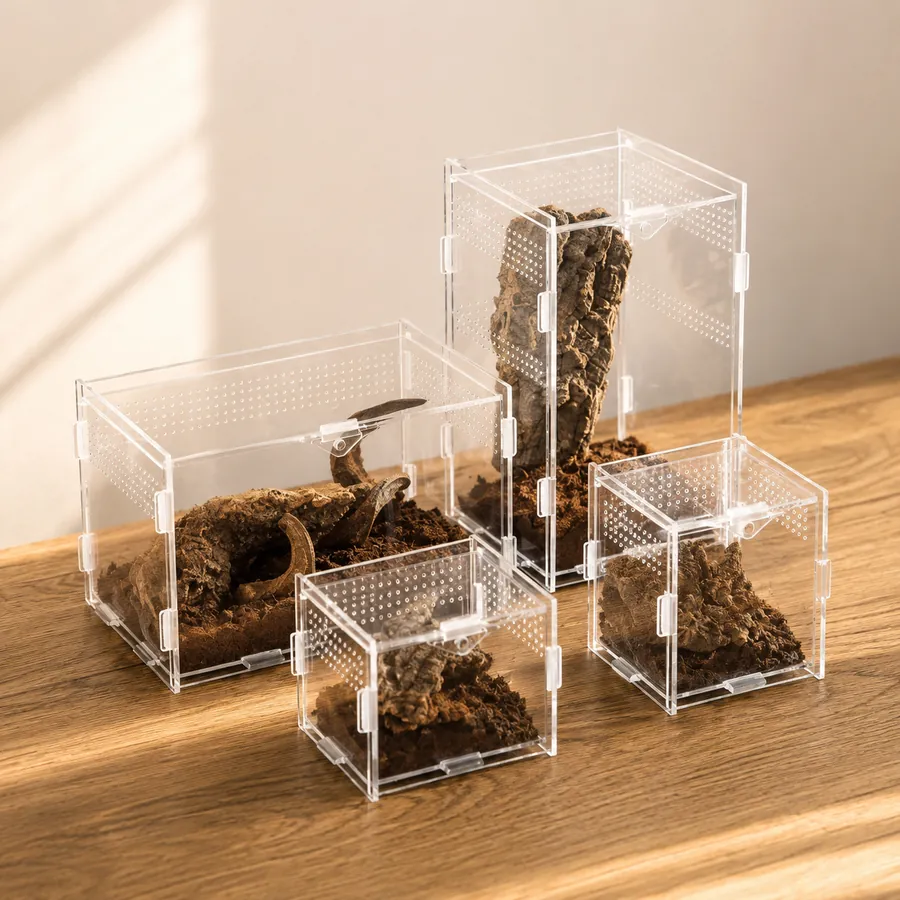
Why smaller is better for slings
A spiderling in a large tank is a spiderling in trouble. Two problems show up immediately. First, prey becomes hard to find. A small cricket dropped into a big enclosure can wander off and hide, and a hungry sling that never encounters it goes without a meal. In a compact home the prey stays in reach and the spider eats. Second, height becomes a hazard. A sling that climbs the wall of a tall enclosure and drops can hurt itself. Keep the space small and low and both risks shrink.
There is a welfare reason too. Ambush predators feel secure when the space matches their body. A right-sized sling home lets the animal set up a burrow or a web retreat, settle, and behave normally. This is the exact thinking behind our dedicated sling enclosure, which is sized so prey stays findable and the spider stays reachable when you check on it.
The stages: sling to adult
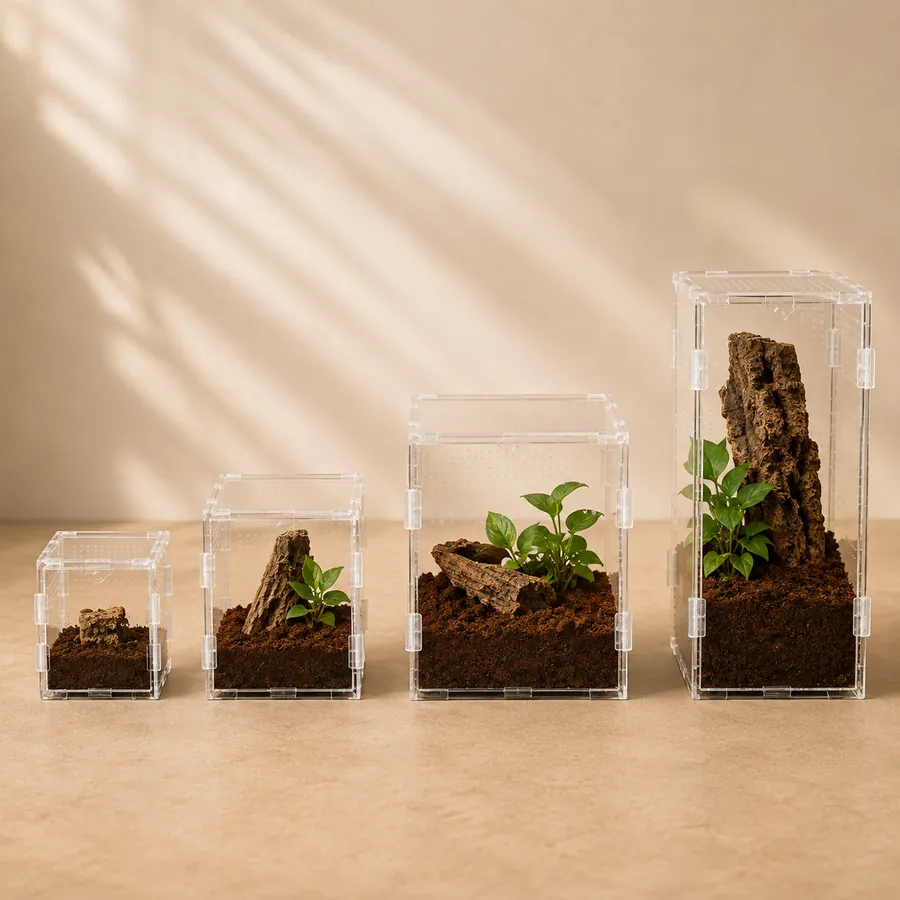
Growth is not one jump. It is a series of molts, and you re-house a few times along the way. Here is the arc I follow with my own animals.
| Stage | What the spider needs | Enclosure priority |
|---|---|---|
| Sling (spiderling) | Findable prey, short falls, snug retreat | Small footprint, low height |
| Juvenile | Room to grow into, still easy to monitor | Modest step up in floor area |
| Adult terrestrial | Ground space and deep substrate to burrow | Wide floor, limited height |
| Adult arboreal | Vertical space and climbing surfaces | Height and cork bark |
Because a tarantula can share your home for a very long time, this is a sequence you will actually live through, not a hypothetical.
documented lifespan of females in some tarantula species, so re-housing across stages is normal keeping
— Encyclopaedia Britannica, 2024
One enclosure covers one stage, not a whole life. You fit the right one for now, and you step up when the spider outgrows it. The good news is that each step is inexpensive and the logic stays the same: match the space to the animal in front of you.
Adult terrestrials: floor over height
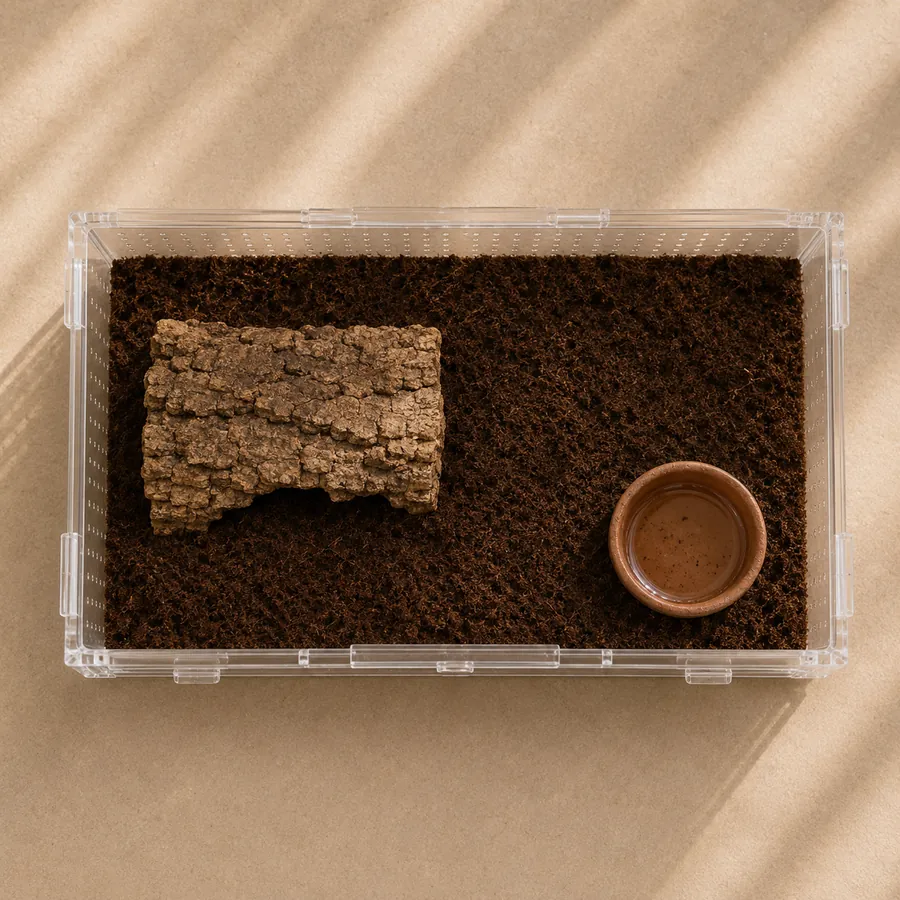
Ground-dwelling tarantulas spend their lives on and under the surface. What they want as adults is floor area and deep substrate to dig into, not a tall showpiece.
Notice the wording there. I am not quoting a percentage, because a trustworthy figure for injury rates does not exist. What does exist is a broad, well-established consensus in the hobby and among people who treat these animals: keep the drop short for a ground-dweller. That single principle should drive your choice of shape. A terrestrial tarantula enclosure gives more floor than height on purpose, so you can pile substrate deep and still keep the fall distance low. For the substrate side of that equation, see the substrate guide.
Adult arboreals: height matters
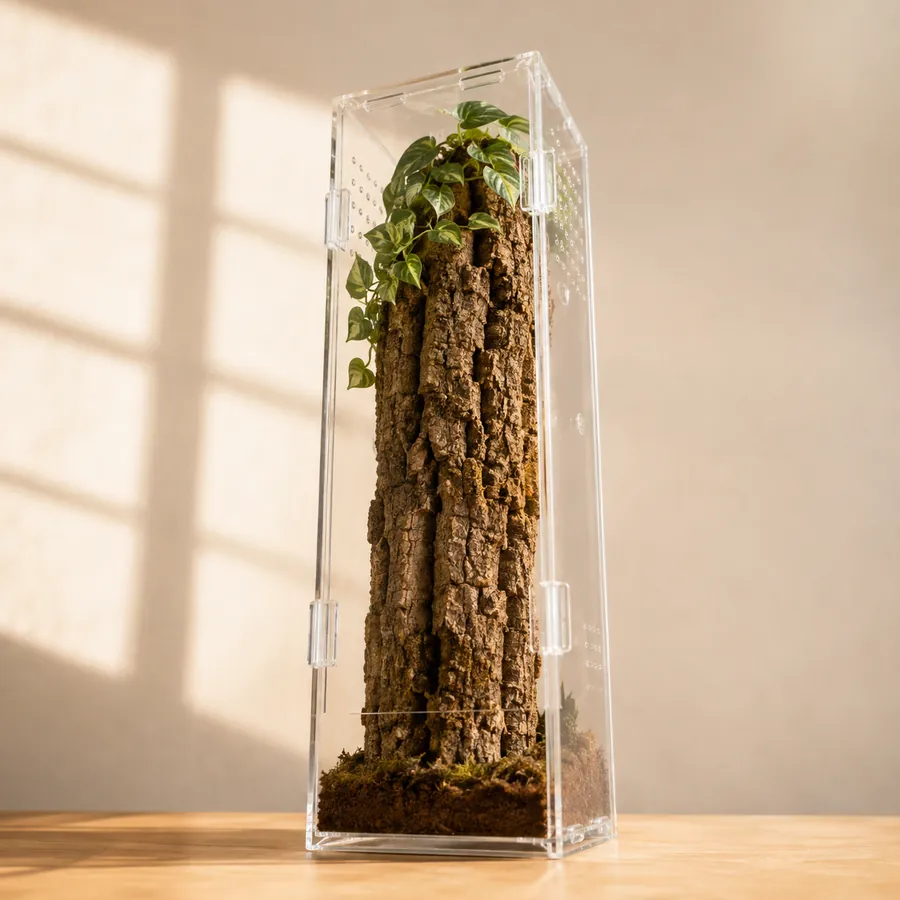
Tree-dwelling species flip the rules. They live vertically, anchoring web retreats high on bark, so height is exactly what they need. A short, wide box frustrates an arboreal, while a taller enclosure with a cork slab lets it build the way it would in the wild. The trade-off is that the substrate layer stays thin, since the animal lives up top rather than in a burrow.
The clearest example is the pink toe. Our arboreal tarantula enclosure is built tall for this reason, and the specifics of setting one up are covered in the pink toe tarantula guide. If you are still deciding which camp your spider falls into, the arboreal vs terrestrial comparison is the place to start. That fork in the road matters because there are so many species with different habits.
described tarantula species, split broadly into ground-dwelling and tree-dwelling lifestyles
— World Spider Catalog, 2024
How our sizes map to each stage
To make this concrete, here is how the TaranTerra range lines up with the journey above. This is a map, not a shopping list, so use it to understand the logic and pick only what your spider needs right now.
| Stage | Suggested TaranTerra size | Why |
|---|---|---|
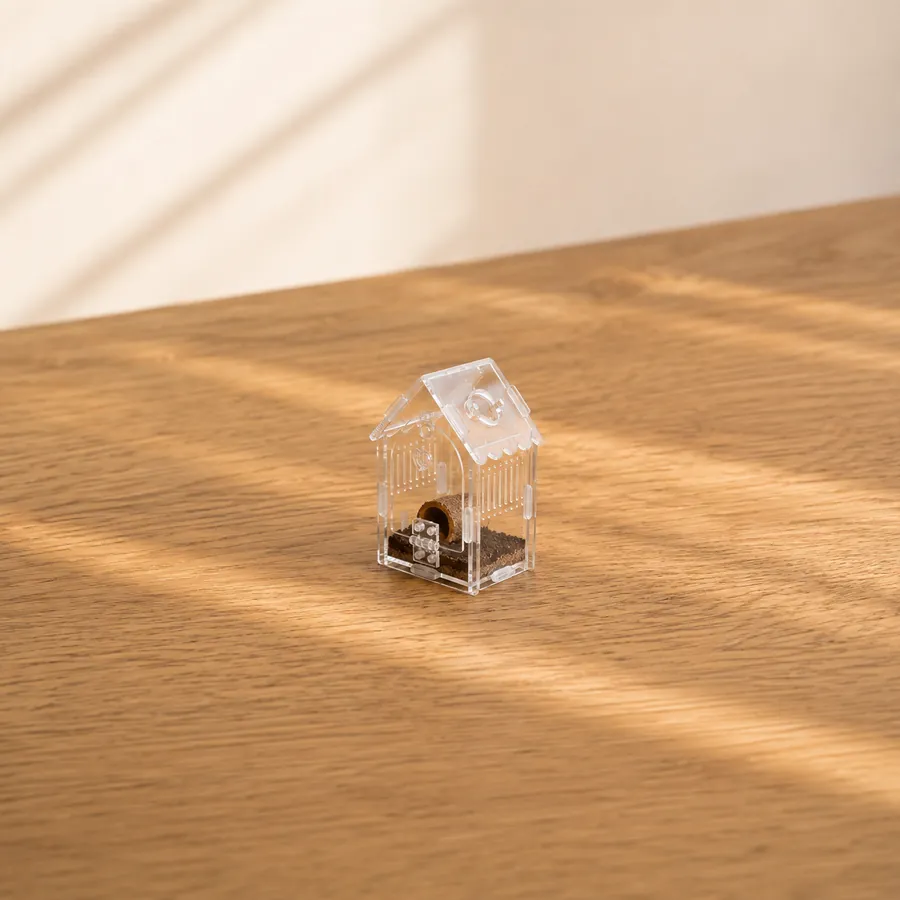
| Sling / hatchling / display | House Small (3 x 3 in (8 x 8 cm) floor) or House Large (4.5 in (12 cm) wide) | Snug home for tiny or hatchling species, and a clear display box |
| Juvenile | Acrylic Small (4 x 4 x 4 in / 10 x 10 x 10 cm) or Medium (4.5 x 4.5 x 8 in / 12 x 12 x 20 cm) | A modest step up while the spider is still easy to monitor |
| Adult terrestrial | Acrylic Large Wide (10 x 6 x 6 in / 25 x 15 x 15 cm) | Wide floor, limited height, deep substrate |
| Adult arboreal | Acrylic Large Tall (6 x 6 x 10 in / 15 x 15 x 25 cm) | Vertical space for climbing and a cork slab |
One honest note on the House models. We position them as sling and display enclosures for hatchlings or tiny species, not as a home for a full-grown tarantula. If you have an adult, skip straight to the Large Wide or Large Tall depending on lifestyle.
Adult arboreal pick
TaranTerra Acrylic Large Tall (6 x 6 x 10 in / 15 x 15 x 25 cm)
Vertical height and clear panels for a tree-dwelling adult that anchors its retreat up high on cork bark.
$59.95 $79.95 Save $20.00
From my own shelves
When I moved a nervous juvenile from an oversized tub into a snug enclosure, the change in behavior was obvious within days. It stopped roaming the walls, set up a retreat in one corner, and started taking prey reliably again. That is the pattern I see over and over: right-sizing down solves feeding and stress problems that a bigger box created in the first place. Bigger is not kinder for a tarantula.
If you want the criteria behind a good enclosure at any stage, the how to choose a tarantula enclosure guide covers ventilation, access, and secure lids, and the ventilation guide explains why airflow belongs on that list. You can also read buyer feedback on our own enclosures in the verified reviews, and see our method on the how we test page.
Quick answers
How big should an adult tarantula enclosure be? Aim for a floor at least about three times the leg span for a terrestrial, with limited height. Arboreals want a taller enclosure with the same generous span in the vertical dimension.
Can a tarantula live in a large tank its whole life? Not comfortably as a sling. Start small so prey stays findable, then step up as it grows. Right-sizing at each stage beats one oversized tank.
Is a taller enclosure always better? Only for arboreals. For terrestrials, extra height adds fall risk without benefit.

Adrian Costa · Tarantula keeper, 10+ yrs
Adrian has kept tarantulas for over a decade and has raised dozens of slings to adults. He builds and tests every enclosure on his own shelves before writing about it.
Free shipping · 30-day money-back guarantee · Ships in 8–10 business days