
· Adrian Costa
Tarantula enclosure ventilation: airflow, humidity and mold
Ventilation is the quiet criterion. It never looks as important as size or a pretty planted floor, so beginners skip it, and then they fight mold, stressed spiders, and mysterious husbandry problems for months. Almost all of it traces back to air that does not move. This guide explains what ventilation actually does, the difference between cross-ventilation and stagnation, how airflow and humidity balance each other, and why the enclosure material matters more than you would think.
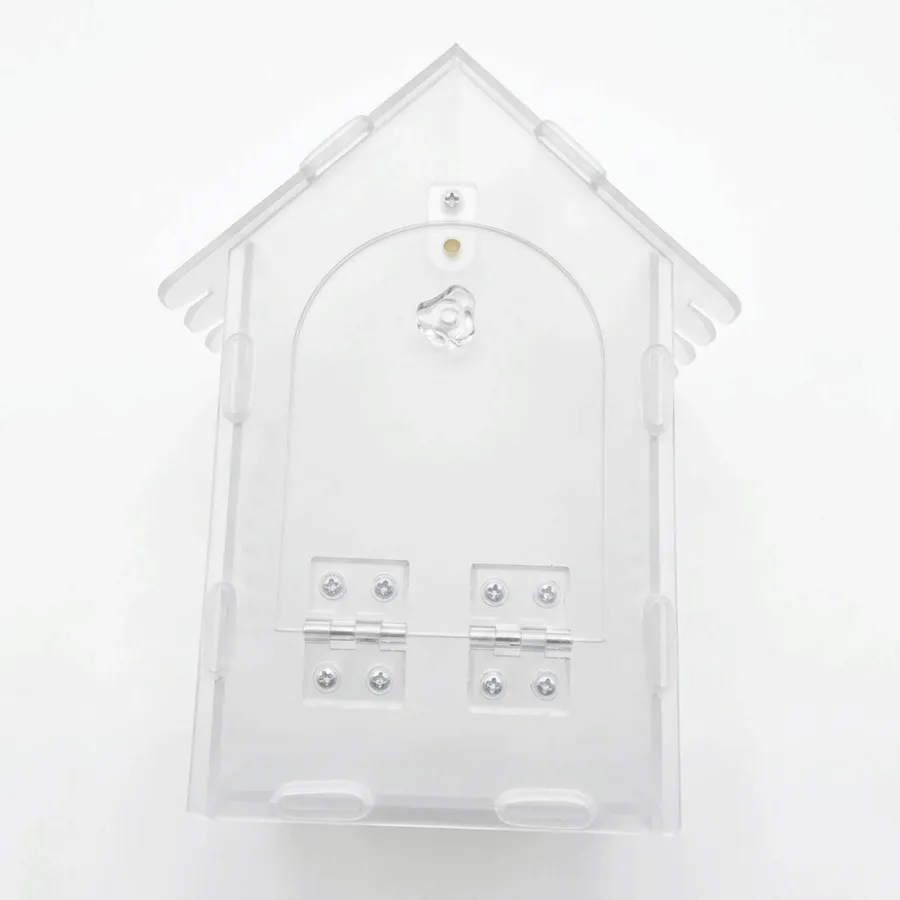
Why ventilation matters
A tarantula breathes through book lungs and lives in the microclimate you build around it. If that microclimate is a pocket of still, damp air, the spider is essentially sitting in a stale room with the windows painted shut. Fresh air does three things at once. It carries away excess moisture so humidity does not run away from you. It discourages the mold and mildew that thrive in stagnant damp. And it keeps the general environment healthier for an animal that may live with you for many years.
The mistake is treating ventilation as an afterthought, a couple of holes to tick a box. Airflow is a design feature, and it belongs on your checklist next to size and a secure lid. That is exactly how the how to choose a tarantula enclosure guide frames it.
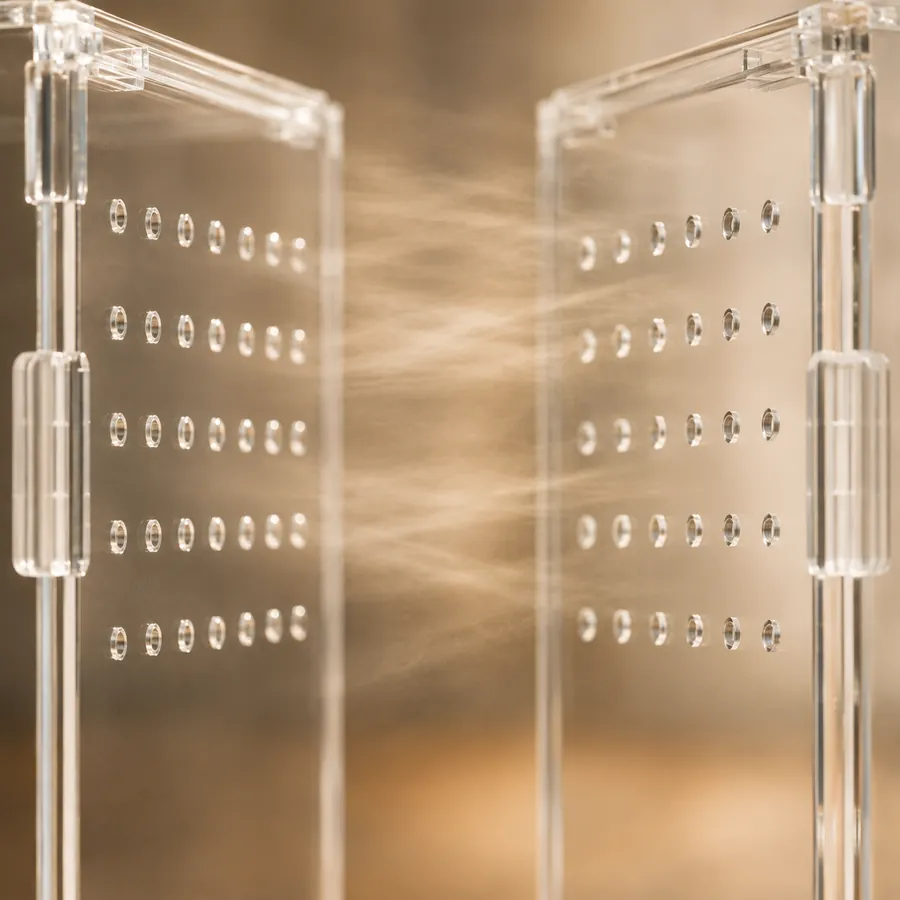
Cross-ventilation vs stagnation
Here is the single most useful idea in this whole guide.
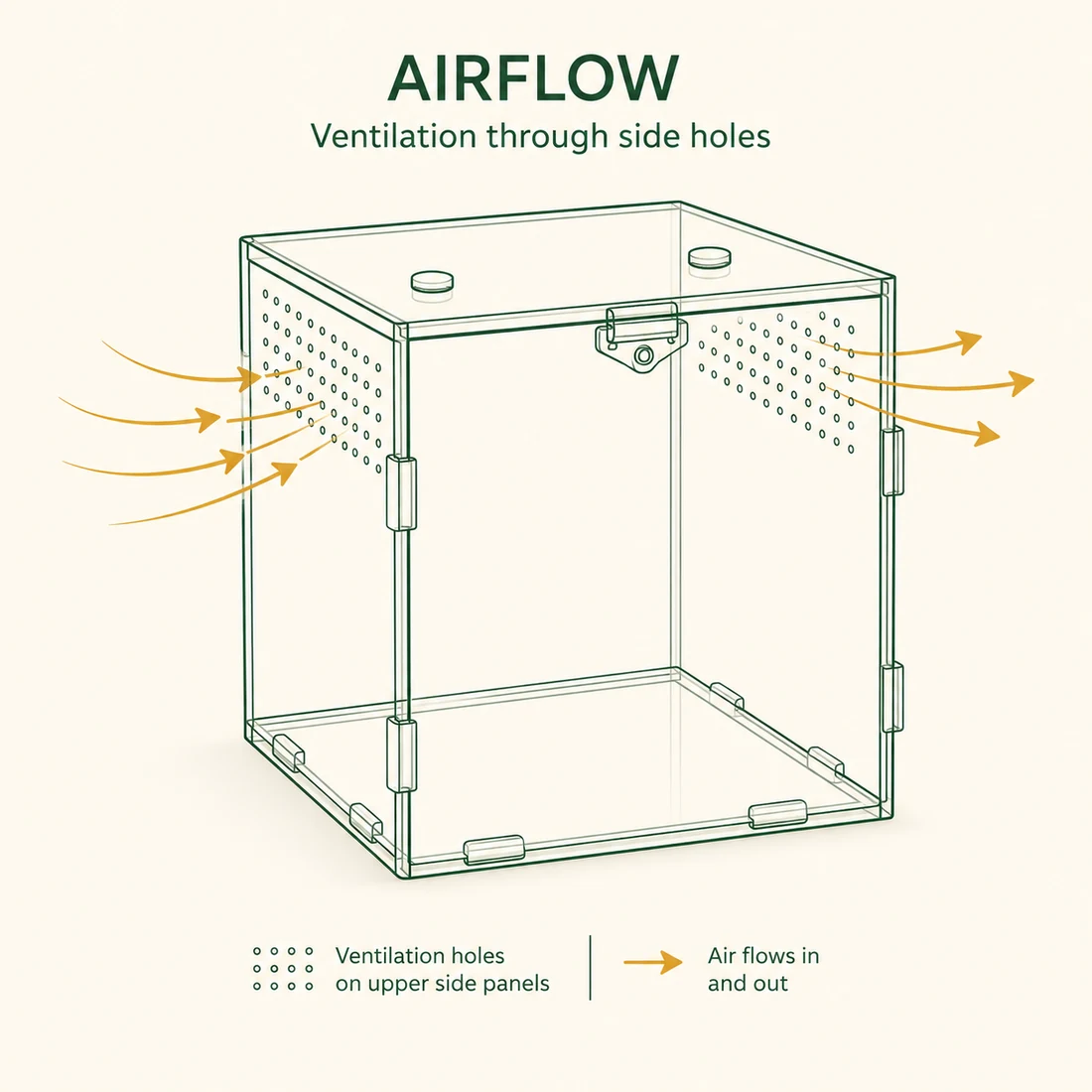
Picture a sealed plastic tub with a few holes in the lid. Air can technically get in and out, but there is no path across the space, so the air inside barely moves. Now picture an enclosure with vent rows on the back and sides. Air enters low, drifts across, and leaves higher up, and the whole interior stays fresher. You do not need a strong draft. Gentle, continuous exchange is the goal, not a wind tunnel.
| Setup | Airflow | Result |
|---|---|---|
| Sealed tub, few lid holes | Air sits, little exchange | Trapped humidity, mold risk |
| Vents on one panel only | Limited, one-directional | Better, still uneven |
| Vents on multiple panels | Air travels across | Fresh, stable microclimate |
Humidity vs mold
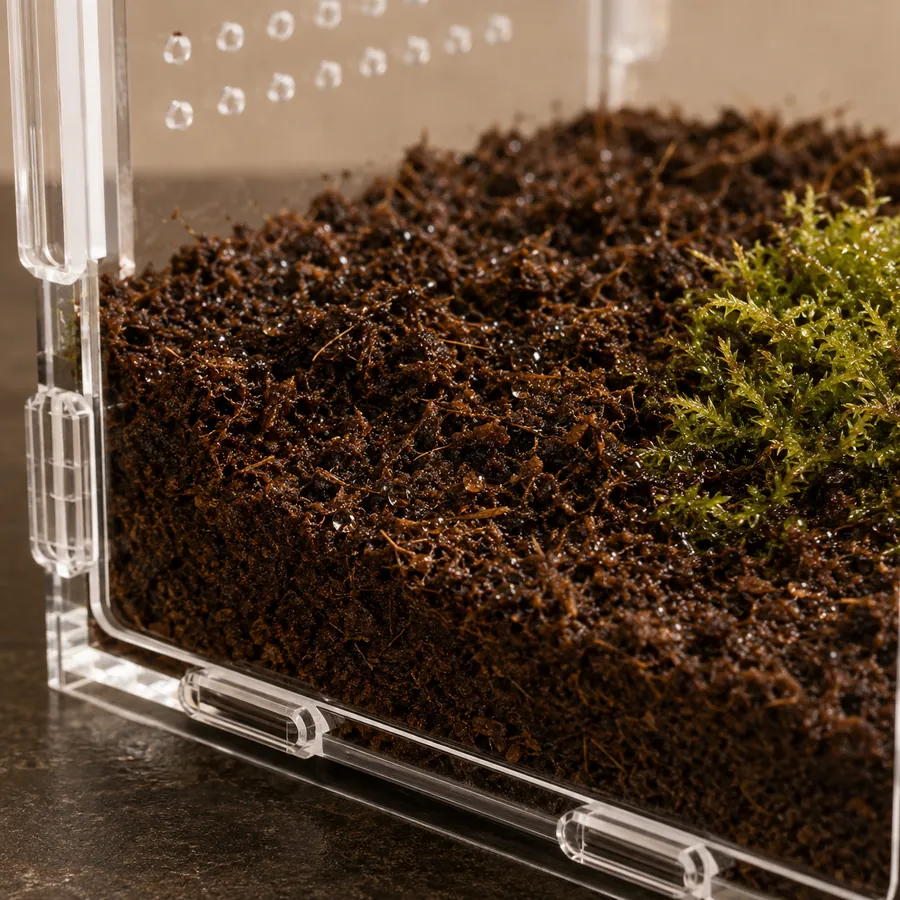
Keepers often think of humidity and ventilation as opponents, as if adding airflow means losing the moisture their spider needs. In reality they are partners. Humidity comes from a lightly damp substrate and a water dish. Ventilation manages that humidity so it stays healthy instead of curdling into a swamp. Cut ventilation to trap moisture and you do not get a well-hydrated spider, you get mold, mites, and stale air.
The right mental model is a lightly damp substrate breathing under gentle airflow. You add moisture from the top, and fresh air carries off the excess, leaving a stable level rather than a soggy one. This is why the substrate guide keeps repeating the phrase damp, not wet, and why bioactive builds in the bioactive enclosure guide depend so heavily on good airflow. Get the airflow right and humidity becomes easy to hold.
described tarantula species, spanning humid rainforest and dry scrub, so airflow needs vary
— World Spider Catalog, 2024
Why perforated acrylic helps
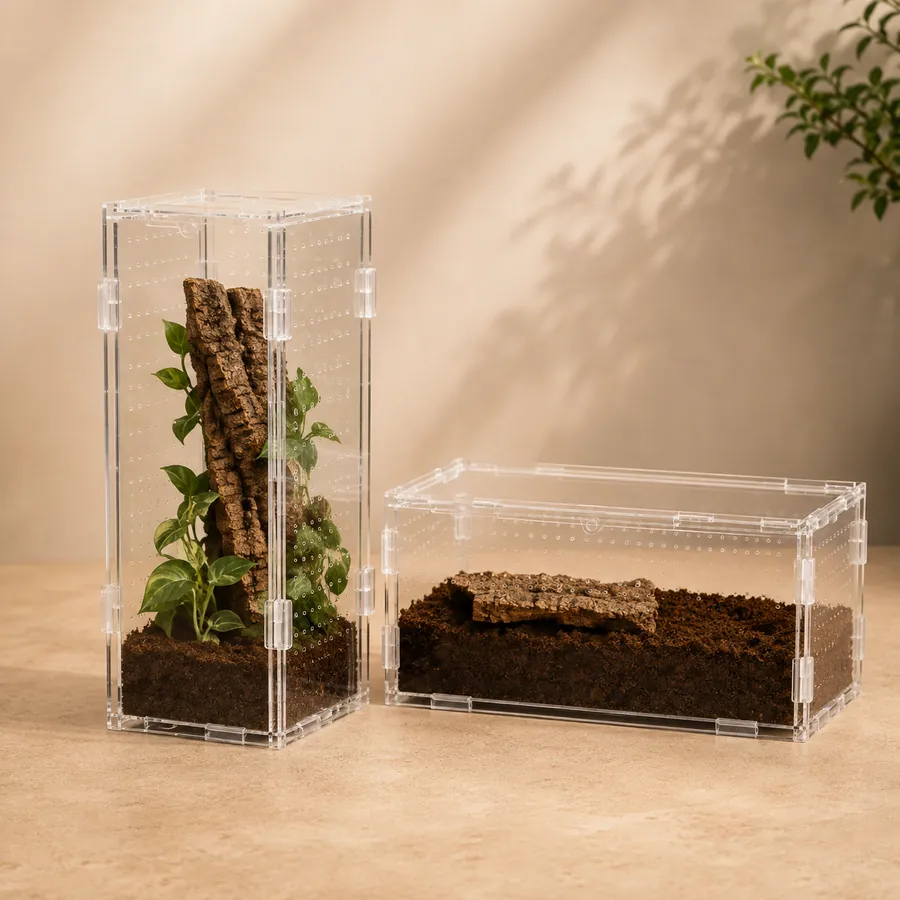
The enclosure material shapes how easy good ventilation is. Perforated acrylic gives you clean, deliberate vent zones on multiple panels, which is precisely what cross-ventilation needs. It stays clear so you can watch the spider without opening the enclosure, and it is light and shelf-friendly compared with glass. Rows of vents on the back and sides create the entry-and-exit paths that keep air moving.
Compare that with a repurposed food tub, where you drill or melt holes yourself and hope for the best. It can be made to work, but the airflow is usually uneven and the plastic scratches and clouds. A purpose-built enclosure bakes the vent pattern into the design. Buyers of our own acrylic range mention how much clearer the view and airflow feel in the verified reviews, and you can see our approach on the how we test page.
From my own shelves
The clearest lesson I learned about ventilation came from a single-vent tub I used early on. It held humidity beautifully and grew mold just as beautifully. When I switched that spider into an enclosure with vents on the back and sides, the mold problem simply stopped, with no change to how I watered. Nothing on my shelves has convinced me more that airflow, not more misting, is the real fix for a damp, stale enclosure.

Airflow needs by species
Ventilation is universal, but the emphasis shifts by lifestyle. Arboreal species are the ones keepers most often report doing poorly in stagnant air, so they benefit from generous cross-ventilation in a tall enclosure. A tree-dweller like a pink toe tarantula in an arboreal tarantula enclosure should have plenty of moving air. Terrestrial species in a terrestrial tarantula enclosure still need cross-ventilation, just balanced against the deeper, dampen-able substrate they burrow into. The difference between the two lifestyles is covered in arboreal vs terrestrial, and sizing in the enclosure size by stage guide.
Because tarantulas are such a long commitment, dialing in airflow once pays off for years.
documented lifespan of females in some tarantula species, so a healthy microclimate is a long-term win
— Encyclopaedia Britannica, 2024
Quick answers
Can a tarantula enclosure have too much ventilation? For dry-habitat species, very heavy airflow can dry the enclosure out faster, but this is easy to manage with a damp corner and a water dish. Too little ventilation is the far more common problem.
Do I need a fan? No. Passive cross-ventilation through vents on multiple sides is enough for a tarantula enclosure. Fans are unnecessary.
Why does my enclosure keep growing mold? Almost always stagnant air plus too-wet substrate. Improve cross-ventilation and let the surface dry between top-ups before doing anything else.

Adrian Costa · Tarantula keeper, 10+ yrs
Adrian has kept tarantulas for over a decade and has raised dozens of slings to adults. He builds and tests every enclosure on his own shelves before writing about it.
Free shipping · 30-day money-back guarantee · Ships in 8–10 business days