
Why we built TaranTerra
TaranTerra started on a shelf of mismatched containers: deli cups, modified food tubs, and one expensive glass tank that suited none of the spiders living near it. Somewhere around the tenth lid we drilled by hand, the idea settled in. Tarantulas deserve housing designed around how they actually live, not hand-me-downs from the reptile aisle.
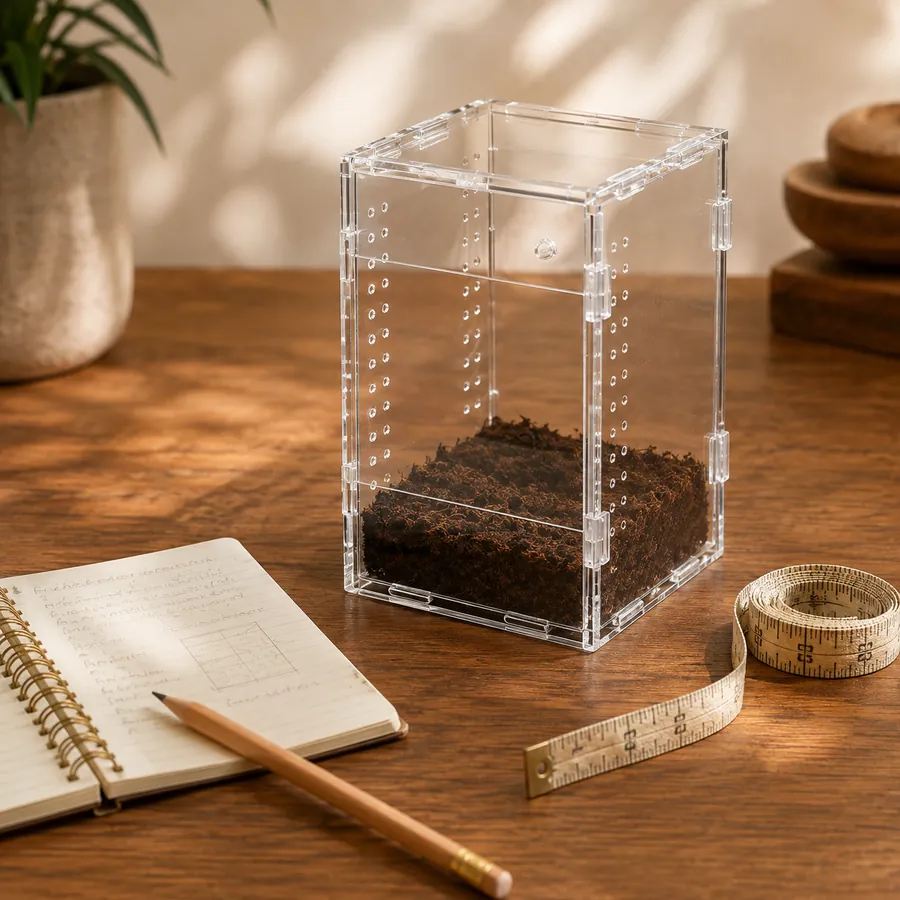
Anyone who has kept tarantulas for a while learns that the enclosure is the husbandry. A heavy-bodied terrestrial species needs floor space, deep substrate to dig into, and a short distance to fall, because a tumble from the top of a tall tank can badly injure a spider's abdomen. An arboreal species has the opposite priorities: it lives above the ground and wants height, something vertical to anchor its web to, and steady cross ventilation. And a sling rattling around an adult-sized tank is not enjoying the extra room; it is struggling to find its next meal. Most housing sold in pet stores was designed for reptiles or fish, so keepers end up improvising. Getting those details right, in clear acrylic you can actually see through, is the whole reason TaranTerra exists.
One range, matched to life stage
We kept the catalog deliberately small. The TaranTerra House is our sling and display enclosure, a little acrylic house with a hinged flip door and rows of ventilation, sized for hatchlings and tiny species and honest about that: we never sell it for adult tarantulas. From there, the acrylic range follows your spider as it grows. The Small and Medium suit juveniles through their fastest molting years, the Large Wide gives an adult terrestrial more floor than height, and the Large Tall gives climbers like the pink toe the vertical space they insist on. Every unit uses clear acrylic with magnetic closures and ships flat for simple assembly. If you are not sure which stage your spider is at, our enclosure size guide walks through it, and our comparison of arboreal and terrestrial tarantulas settles the wide-versus-tall question.
Meet Adrian Costa

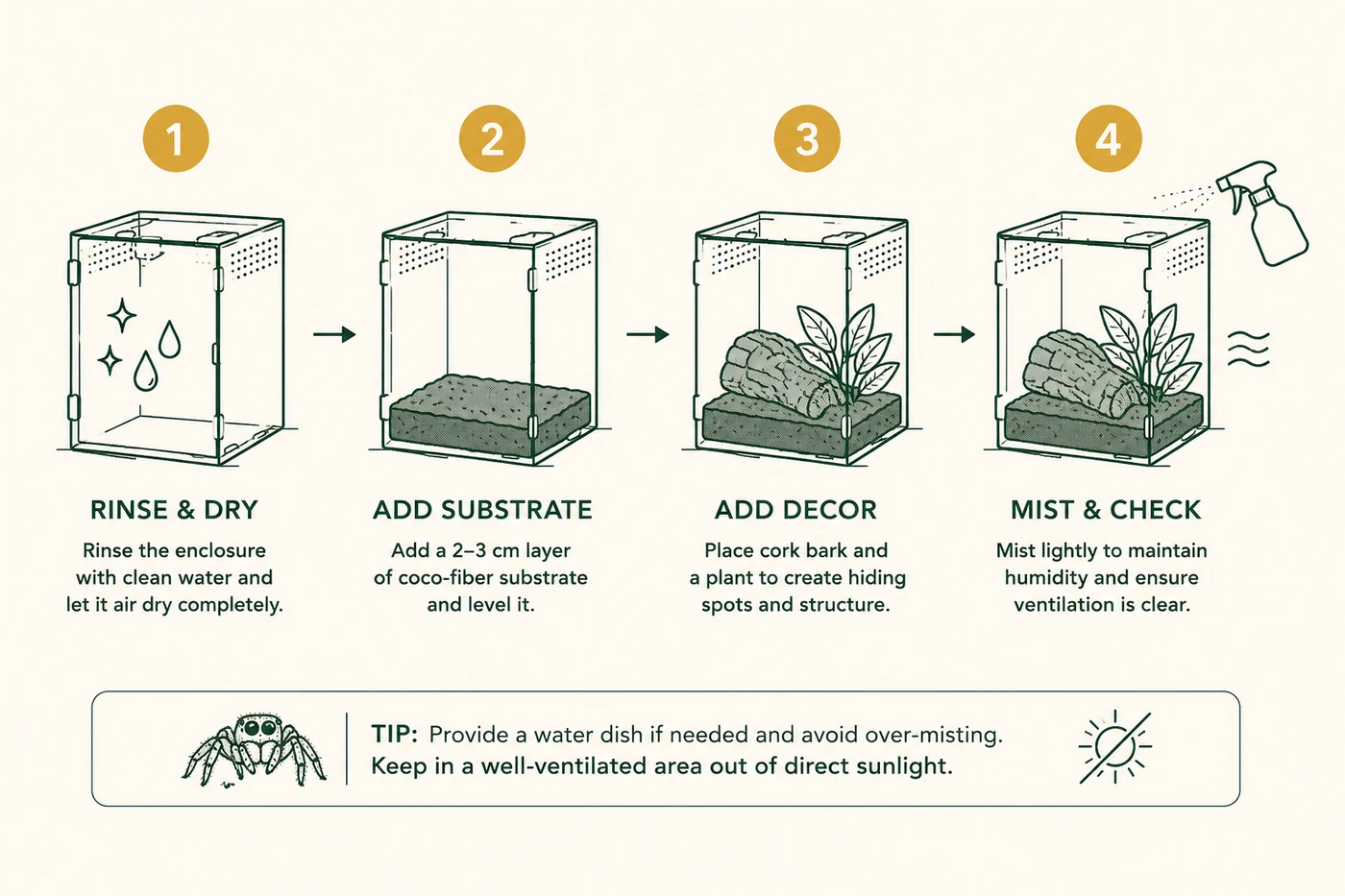
Every page and guide on this site is written by Adrian Costa, a tarantula keeper with more than 10 years in the hobby and dozens of slings raised to adulthood, across terrestrial burrowers and arboreal webbers alike. His office holds a rack of enclosures in daily use, which is where every TaranTerra product gets set up, misted, rehoused into, and lived in before it earns a page here. That long run of rehousings, molts, and the occasional escape attempt shapes everything he writes, from choosing the right substrate to choosing the right enclosure in the first place.
Adrian is a keeper and a writer, not a veterinarian or a biologist. When a topic touches your spider's health, his guides say so plainly and point you toward an exotics vet, because a website is a good place to learn husbandry and a poor place to get a diagnosis.
Measured by default
Every spec on this site comes from the production spec sheet or from what we observe using the enclosures at home, and anything we cannot verify stays off the page. Ratings come from verified buyers: our acrylic range holds a 4.8 out of 5 across 54 verified reviews, which you can read in full on the reviews page. The TaranTerra House is a newer addition and has not gathered its own reviews yet, so we say exactly that instead of borrowing numbers. Our how we test page lays out what we check before anything goes on sale, including the limits of testing at home rather than in a lab.
Every order ships free within the United States and is covered by a 30-day money-back guarantee. If a TaranTerra enclosure does not work out for your spider, email us and we make it right. That guarantee is the business model in one sentence: a small range, tested with real tarantulas, backed properly.