Five properties decide whether an acrylic enclosure suits a tarantula. Here is each one, and how the TaranTerra enclosures answer it.
Our criteria
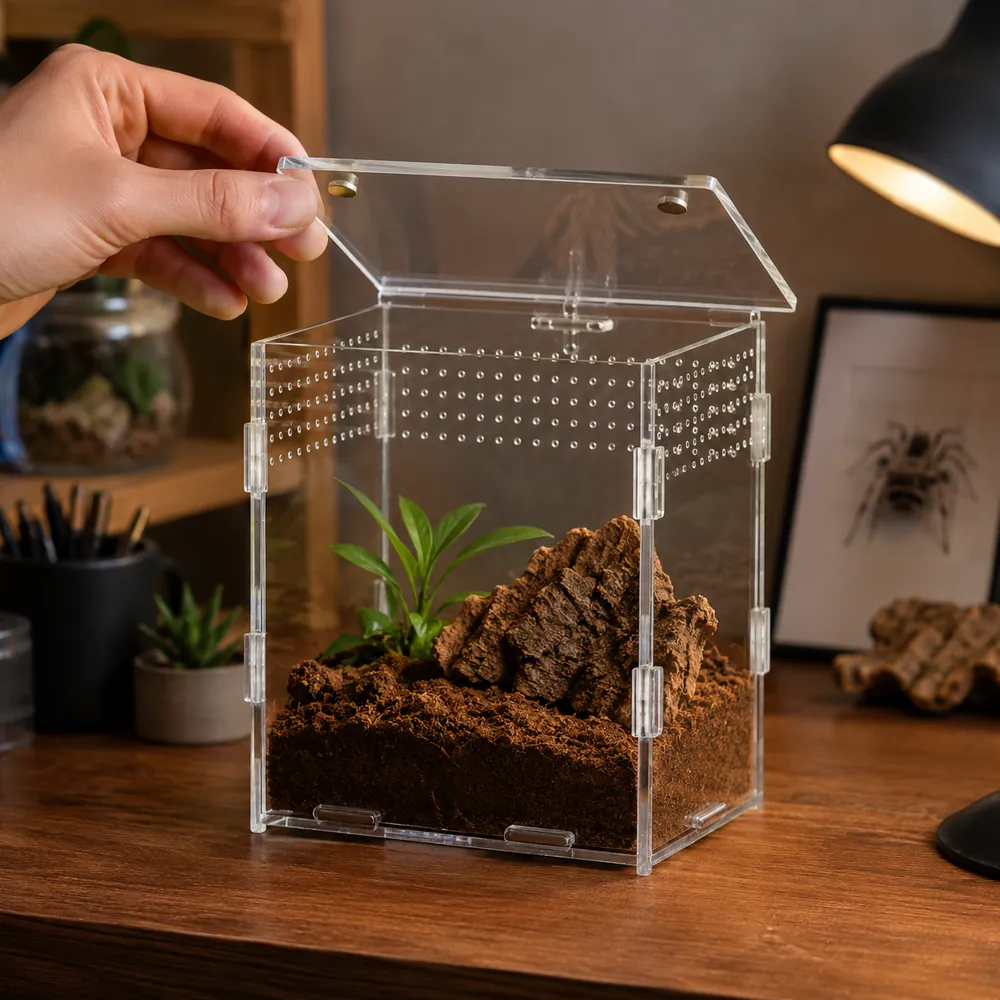
Front access. A hand descending from above reads as a threat to a defensive spider. Both TaranTerra families open from the front: the TaranTerra House with a hinged flip door, the acrylic range with a magnetic front door. Feeding, water and spot-cleaning happen at the spider's level, without lifting a full lid over the animal.
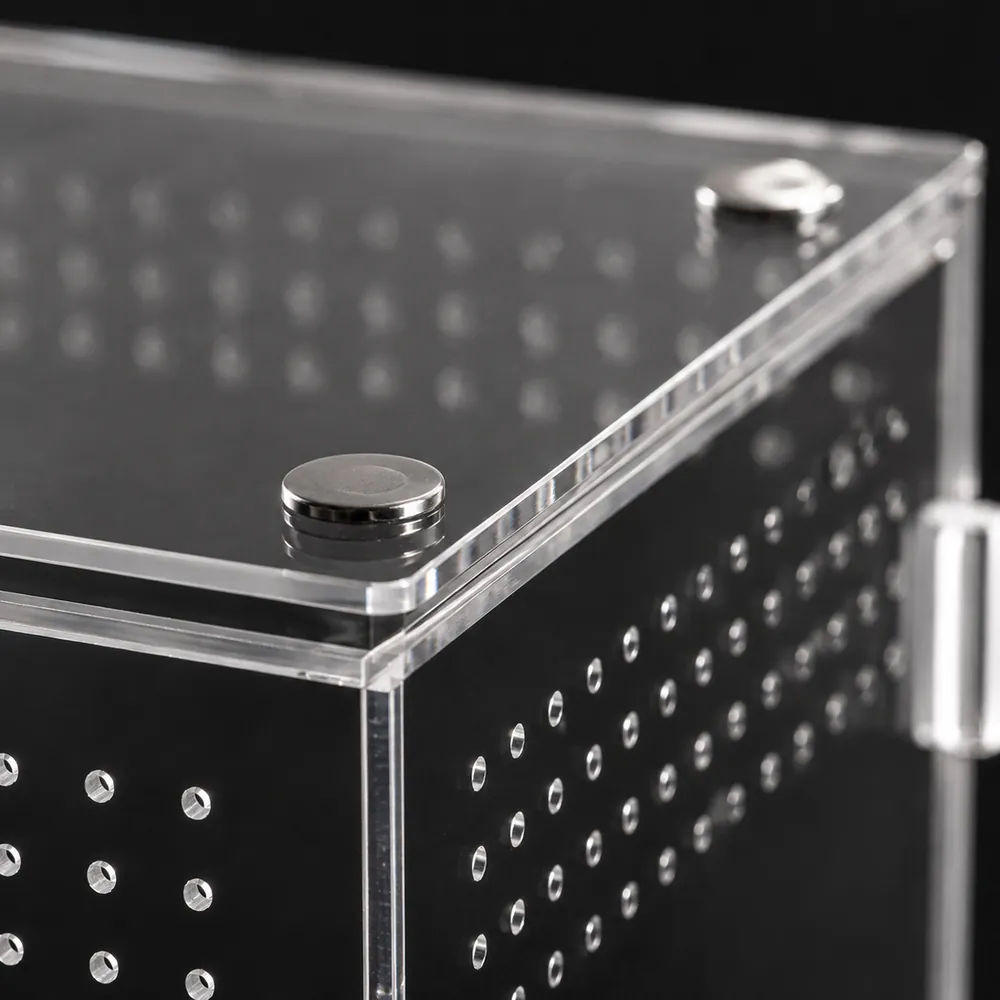
Ventilation matched to lifestyle. Terrestrial species do well with standard ventilation rows; arboreal species are sensitive to stagnant, humid air pooling around their retreat. Every TaranTerra enclosure has ventilation built into the panels, and the Large Tall is designed for cross-ventilation between the front and the upper panels. The ventilation guide covers the balance in detail.
Clarity. The point of an acrylic enclosure is seeing your spider. Clear acrylic lets you watch a molt or a feeding response without opening the door, and inspect for mold or mites without disturbing the animal. Every panel arrives in a protective film that comes off before assembly.
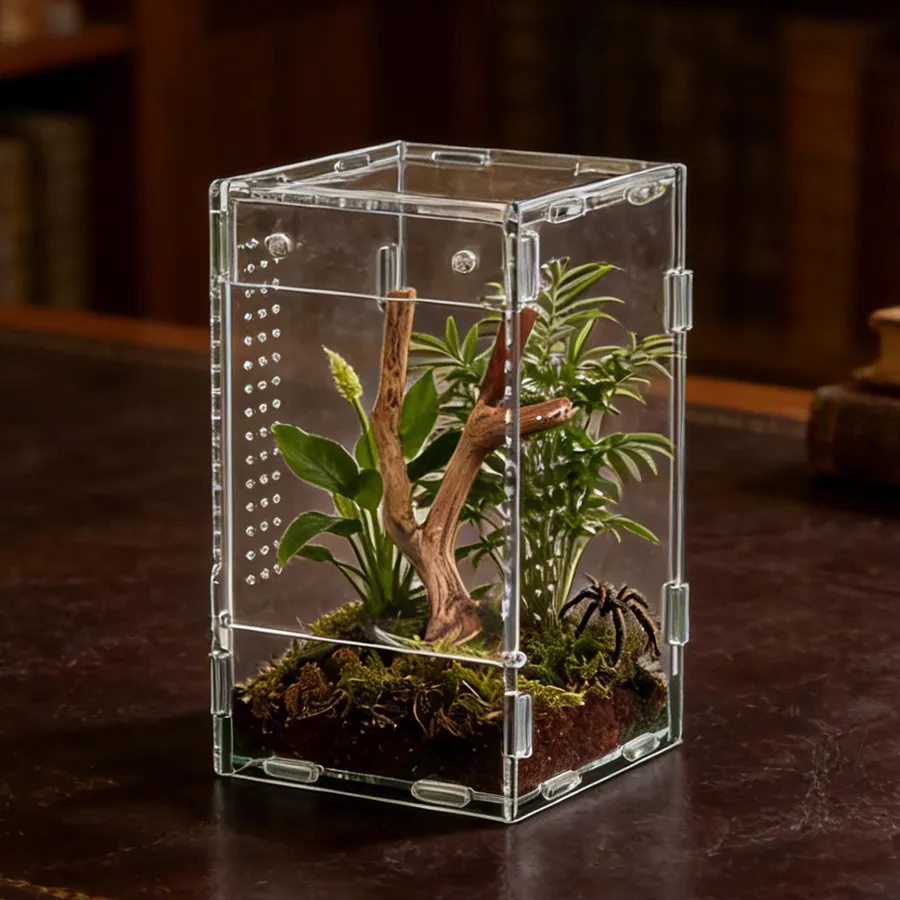
Shape by lifestyle. A ground-dweller needs floor and a low fall height; a tree-dweller needs height and something vertical to web against. The Large Wide, at 10 x 6 x 6 in (25 x 15 x 15 cm), is built for terrestrial adults; the Large Tall, at 6 x 6 x 10 in (15 x 15 x 25 cm), for arboreal adults. The House and the smaller cubes cover slings and juveniles.
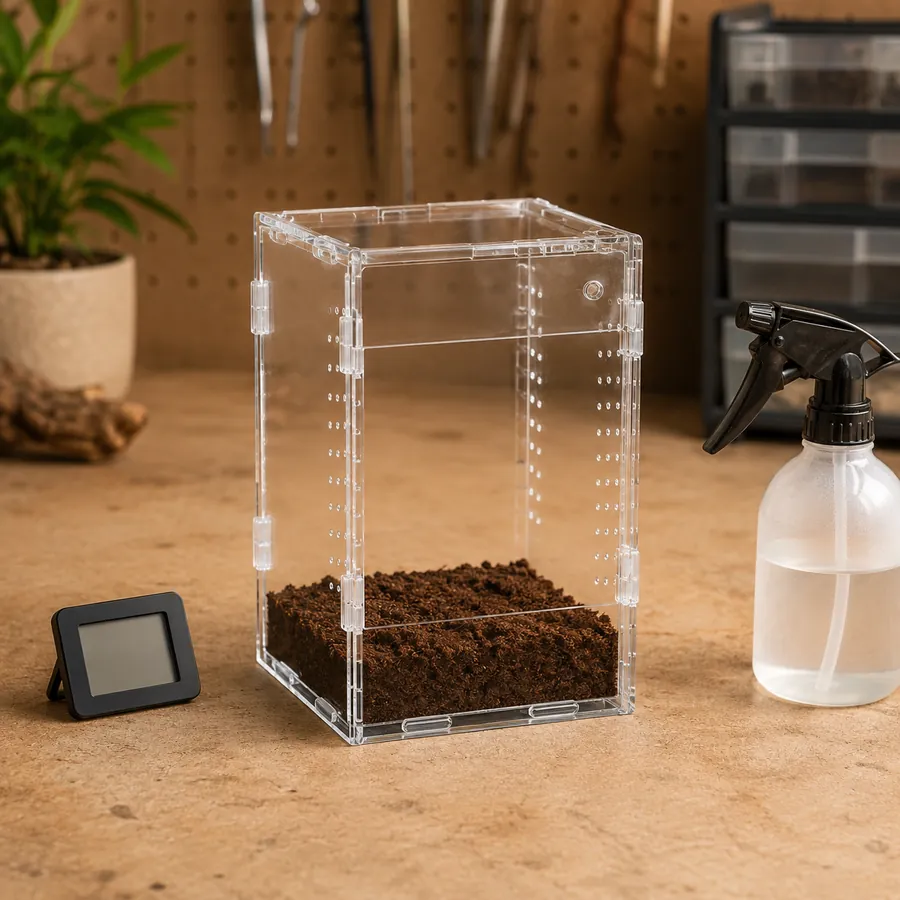
Assembly. Every unit ships flat and clicks together at home: peel the protective film, fit the panels, seat the door. Buyers consistently call the process quick and clear, and the panels come apart just as easily for a deep clean.
Choosing by stage
Slings and tiny species start in the House or the 4 in (10 cm) acrylic cube, where prey stays findable. Juveniles move up to the 4.5 in (12 cm) medium as they bulk out. Adults split by lifestyle: the Large Wide for ground-dwellers, the Large Tall for tree-dwellers. The enclosure size guide covers rehousing step by step, and buyer feedback on the acrylic range is on the reviews page. Every order ships free in the US with a 30-day money-back guarantee.