
· Adrian Costa
How to choose a tarantula enclosure
Search for the best tarantula enclosure and you will find plenty of listicles ranking products with star scores that came from nowhere. I am not going to do that, because I cannot honestly rate enclosures I have not lived with, and inventing numbers would make this guide worthless. Instead this is a criteria guide. It teaches you what actually matters so you can judge any enclosure, ours included, on its merits. At the end I will tell you plainly where our own range fits and where it does not.
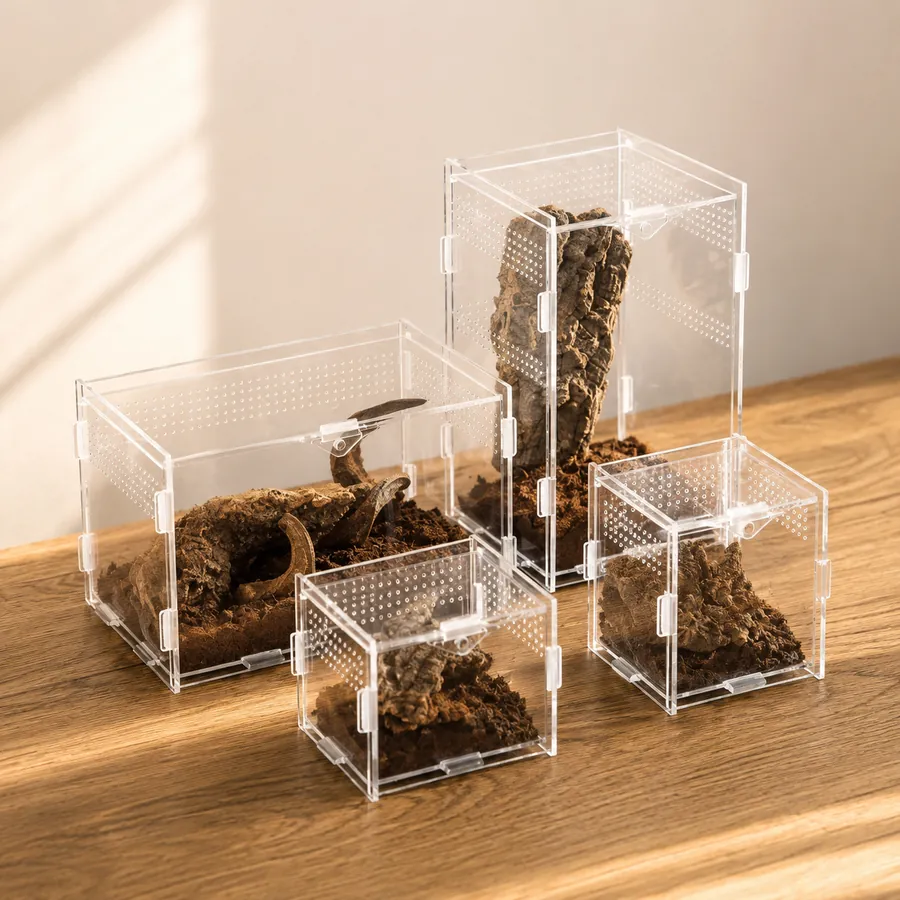
1. Ventilation
Airflow is the criterion beginners underrate the most. A tarantula enclosure needs air to move through it, not just sit inside it. Without ventilation, moisture stalls, and stale, humid air is where mold and stressed spiders come from. The gold standard is cross-ventilation, meaning vents on more than one side so air actually travels across the space rather than pooling. This matters even more for arboreal species, which keepers widely report do poorly in stagnant air.
When you look at an enclosure, count the vent zones and check they are not all on one panel. Perforated acrylic with vents on multiple sides beats a sealed plastic tub with a couple of holes punched in the lid. The full reasoning, including why humidity and airflow are two halves of one system, is in the ventilation guide.
2. Safe, easy access
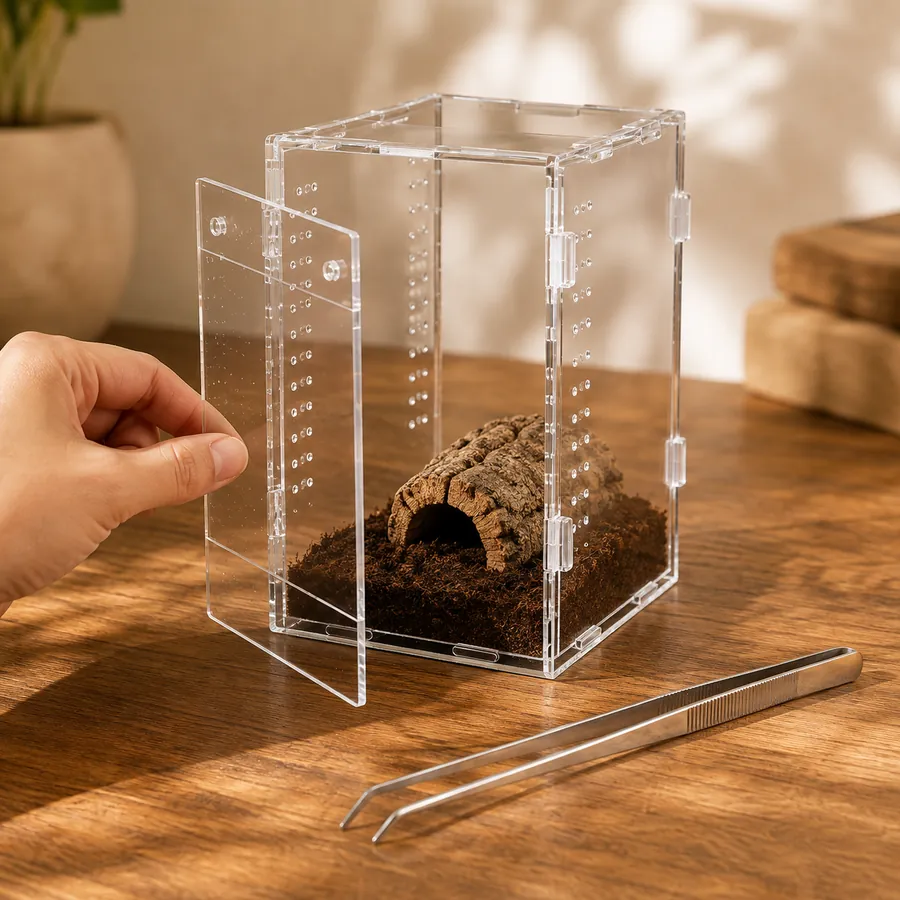
You will open this enclosure often, to feed, to refill water, to spot-clean, and to check on a molting spider. How you open it matters for both your convenience and the animal's safety. A front-opening door lets you reach in at the spider's level without looming over it from above, which is less stressful for the animal and gives you more control. A hinged flip door that you can work one-handed makes routine feeding genuinely easier.
Think about escape risk during access too. Every time the enclosure is open is a chance for a fast spider to bolt, so a design that lets you open a small controlled gap beats one where the whole top comes off at once. Access is not a luxury feature. It shapes how confidently you can care for the animal for years.
3. A lid that closes securely
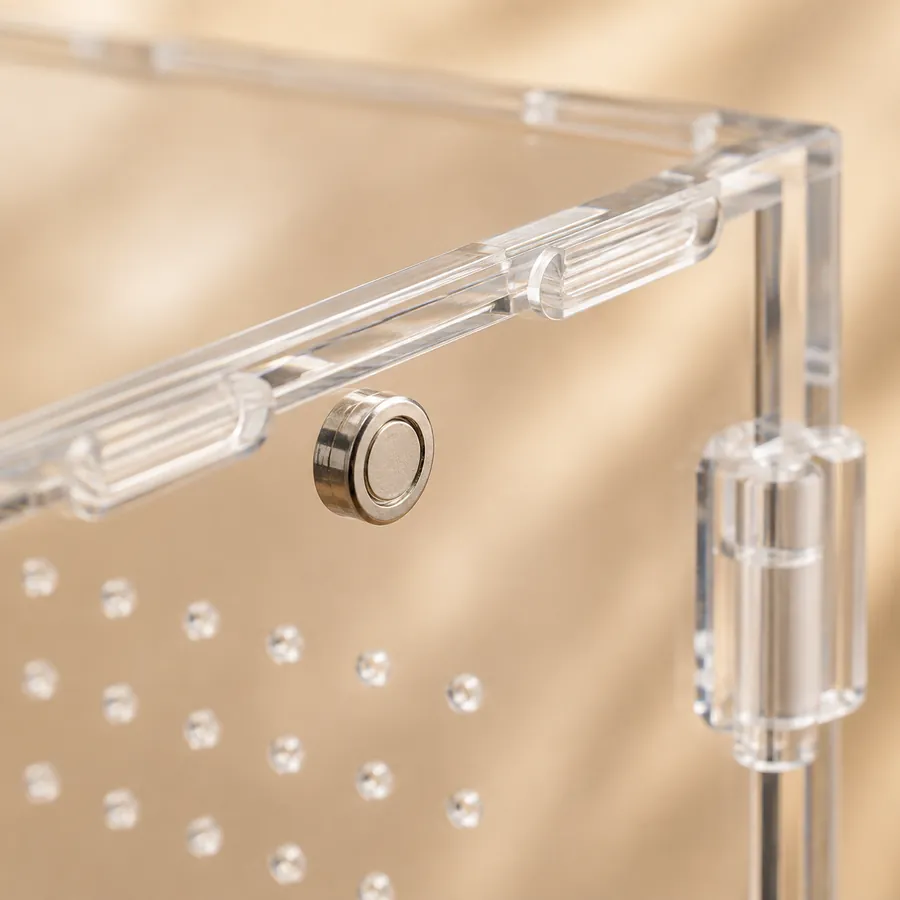
A tarantula that gets out is a tarantula at risk, and a stressful afternoon for you. The closure is therefore not negotiable. Look for a lid or door that positively latches or holds shut, whether by magnets, clips, or hinges that seat firmly, rather than a loose top that only rests in place. Test that it holds when you nudge it.
I deliberately avoid absolute promises about escapes, because no honest keeper can guarantee that about any enclosure. What you can look for is a closure that holds securely in normal use, which is a fair and testable standard.
4. Transparency
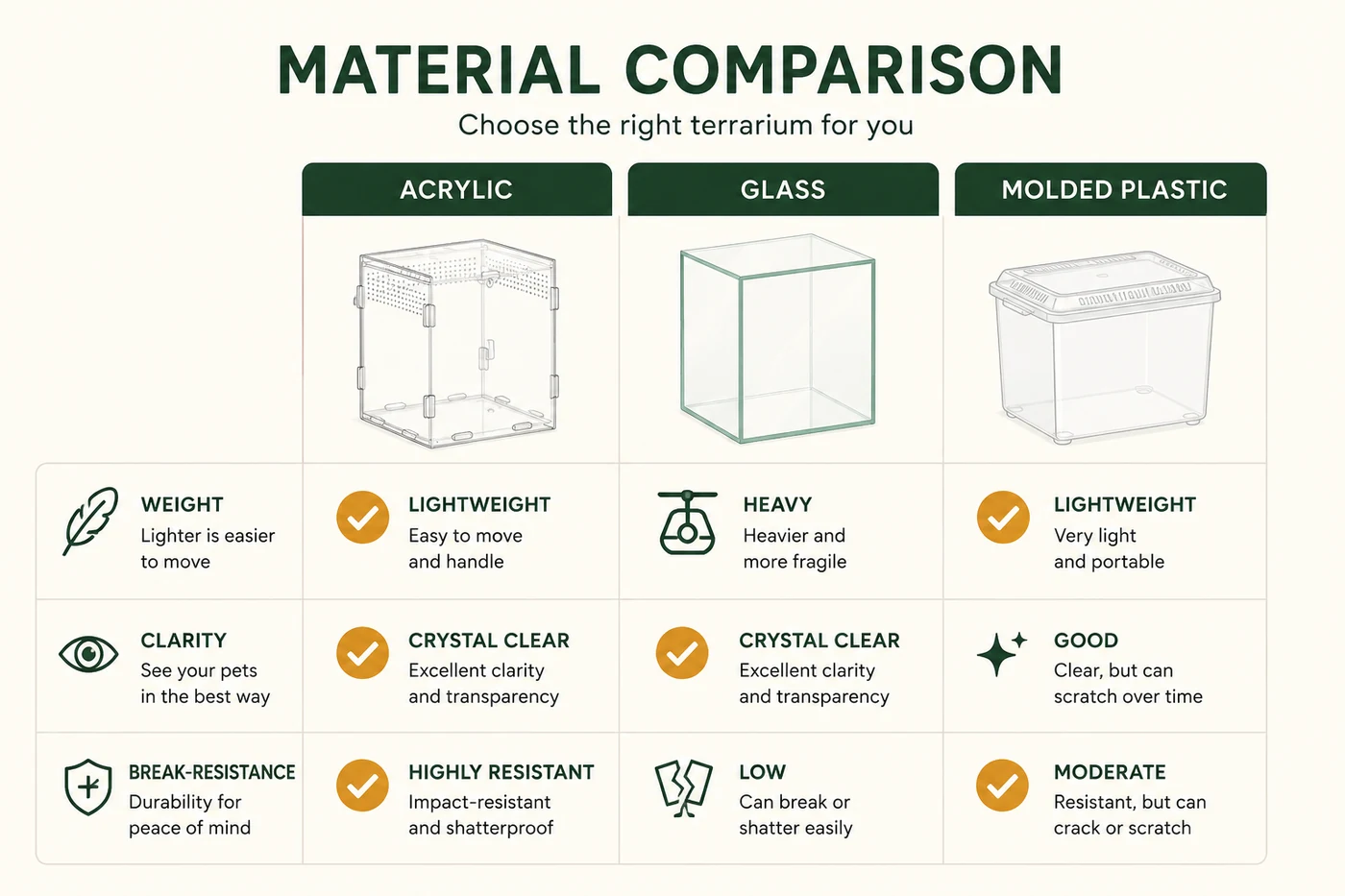
You keep a tarantula partly to watch it, and clear panels make that possible without opening the enclosure and disturbing the animal. Good transparency also lets you spot problems early, a spider in a pre-molt curl, mold starting on the substrate, or prey that went uneaten. Clear acrylic gives an excellent view and is lighter and less fragile than glass, which matters when an enclosure lives on a shelf.
Check for optical clarity and a smooth finish. Many acrylic enclosures ship with a protective film that peels off to reveal a crisp view, something buyers of our own range mention in the verified reviews. A cloudy or heavily scratched panel defeats half the reason you set the habitat up.
5. Size and shape by stage
The final criterion pulls the others together. An enclosure is only right if it fits the spider you have now, and the correct shape depends on lifestyle.
| Spider | Right shape | Why |
|---|---|---|
| Sling | Small footprint, low height | Prey stays findable, falls stay short |
| Terrestrial adult | Wide floor, limited height | Ground space to burrow, low fall risk |
| Arboreal adult | Tall, with climbing surfaces | Vertical living on bark |
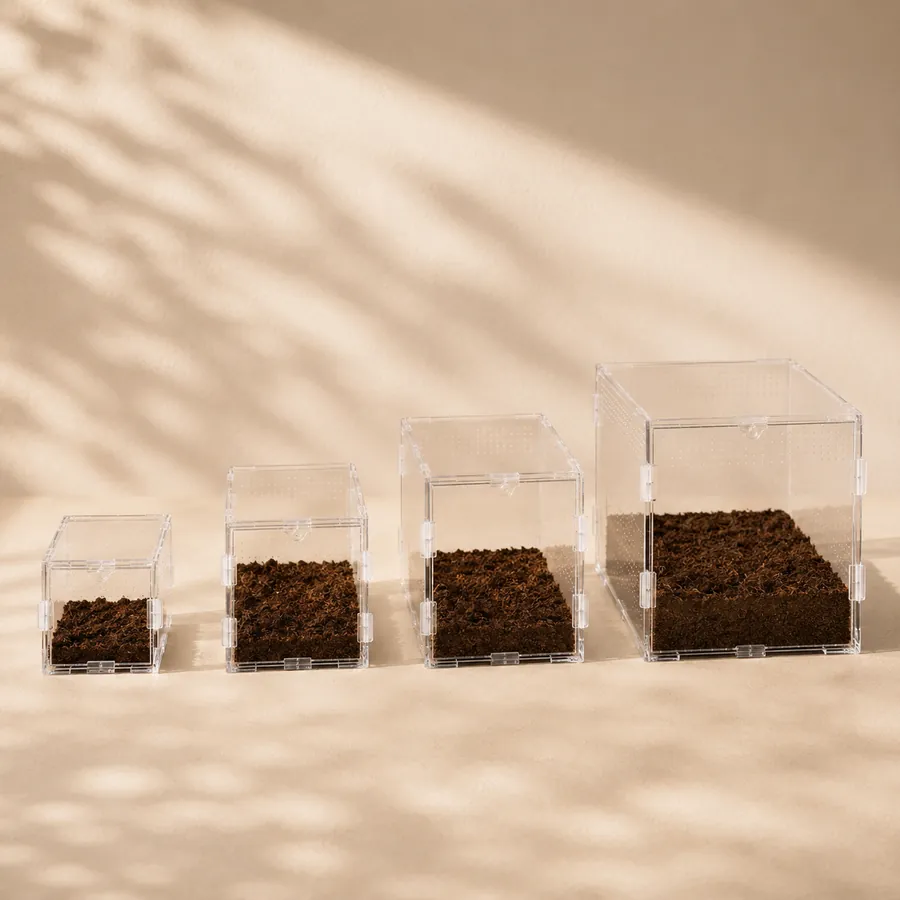
Getting this wrong is the classic beginner error, usually buying too big too soon. The full breakdown, including how sizes step up over a spider's life, is in the enclosure size by stage guide, and the ground-versus-tree decision is covered in arboreal vs terrestrial. That decision matters because the family is so varied.
described tarantula species, from tiny slings to large-bodied adults with different housing needs
— World Spider Catalog, 2024
The full checklist
Print this, or just keep it in mind while you shop. If an enclosure clears every line, it is a serious contender regardless of the brand on the box.
| Criterion | What good looks like |
|---|---|
| Ventilation | Vents on more than one side for cross-airflow |
| Access | Front or flip door, workable without looming over the spider |
| Closure | Latches or holds firmly, still fully ventilated |
| Transparency | Clear, smooth panels for viewing without opening |
| Size and shape | Matched to stage and to ground or tree lifestyle |
From my own shelves
When I audited my own collection against this list, the enclosures that failed always failed on the same two lines: airflow and closure. The tubs with a single vent panel trapped humidity, and the loose-lidded ones cost me a nerve-racking recapture once. Everything I keep now has cross-ventilation and a positive closure, and those two changes fixed more problems than any expensive accessory ever did.
Where our range fits, honestly
Here is the plain version. Our enclosures are clear acrylic with multi-side ventilation, a front or flip door for level access, and firm closures, so they are built around the five criteria above. Our House models are sling and display enclosures for hatchlings or tiny species, not homes for adults. For an adult, choose the terrestrial tarantula enclosure if your spider lives on the ground or the arboreal tarantula enclosure if it climbs, and start slings in the sling enclosure. What our testing covers is invent a five-star roundup or promise that a spider can never get out. You can read how we work on the how we test page, and pair your choice with the substrate guide to finish the setup.
documented lifespan of females in some tarantula species, which makes a well-chosen enclosure a long-term investment
— Encyclopaedia Britannica, 2024

Adrian Costa · Tarantula keeper, 10+ yrs
Adrian has kept tarantulas for over a decade and has raised dozens of slings to adults. He builds and tests every enclosure on his own shelves before writing about it.
Free shipping · 30-day money-back guarantee · Ships in 8–10 business days