
· Adrian Costa
Arboreal vs terrestrial tarantulas: how lifestyle sets the enclosure
Before you think about size, substrate, or accessories, you need to answer one question: does your tarantula live on the ground or up in the branches? Almost every other setup decision follows from that single fork. A choice that is perfect for one lifestyle is actively wrong for the other. This guide lays out the two types side by side, explains what each one means for the enclosure, and gives you a comparison table you can use to check your own spider.
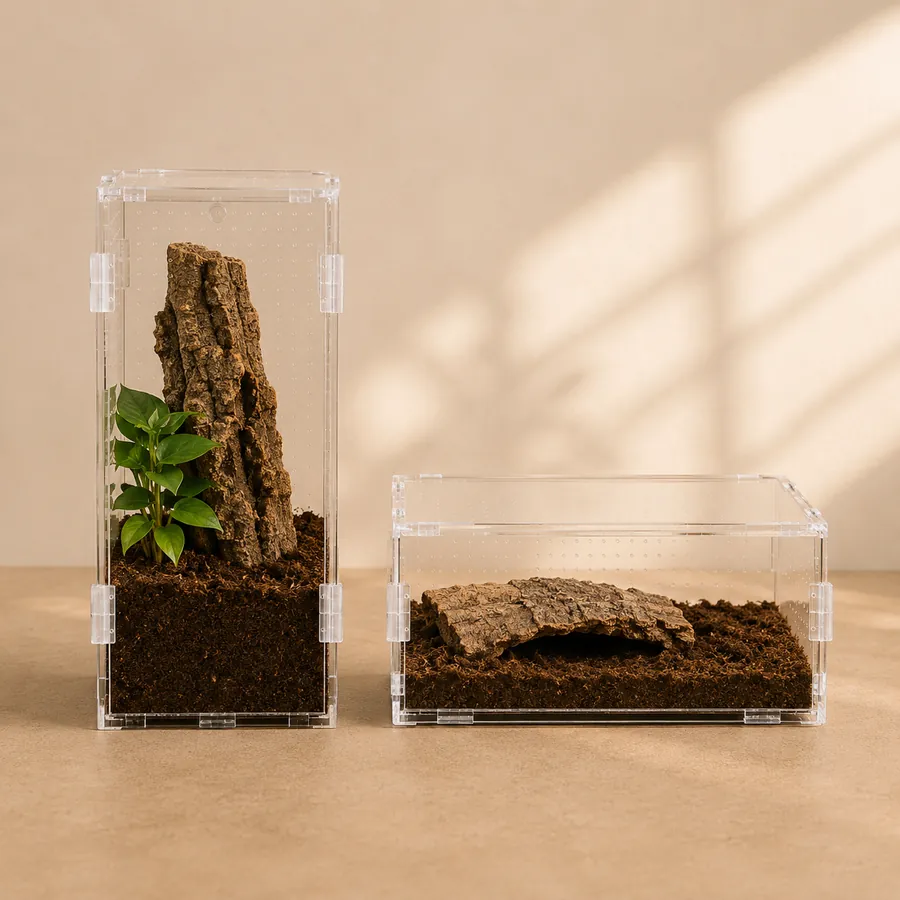
Two lifestyles, two enclosures
Tarantulas are an enormous and varied family, but for housing purposes they sort into two broad groups defined by where they spend their time. Terrestrial species are ground-dwellers, many of them burrowers. Arboreal species are tree-dwellers that live and hunt off the ground. There is a smaller in-between category sometimes called semi-arboreal, but most pet species fall clearly into one camp, and the two-way split is the practical one for choosing an enclosure.
described tarantula species, sorting broadly into ground-dwelling and tree-dwelling lifestyles
— World Spider Catalog, 2024
Why does the split matter so much? Because the two lifestyles have opposite priorities for the one thing you cannot change after you buy: the shape of the enclosure. Get the shape wrong and no amount of substrate or decor fixes it.
Terrestrial tarantulas
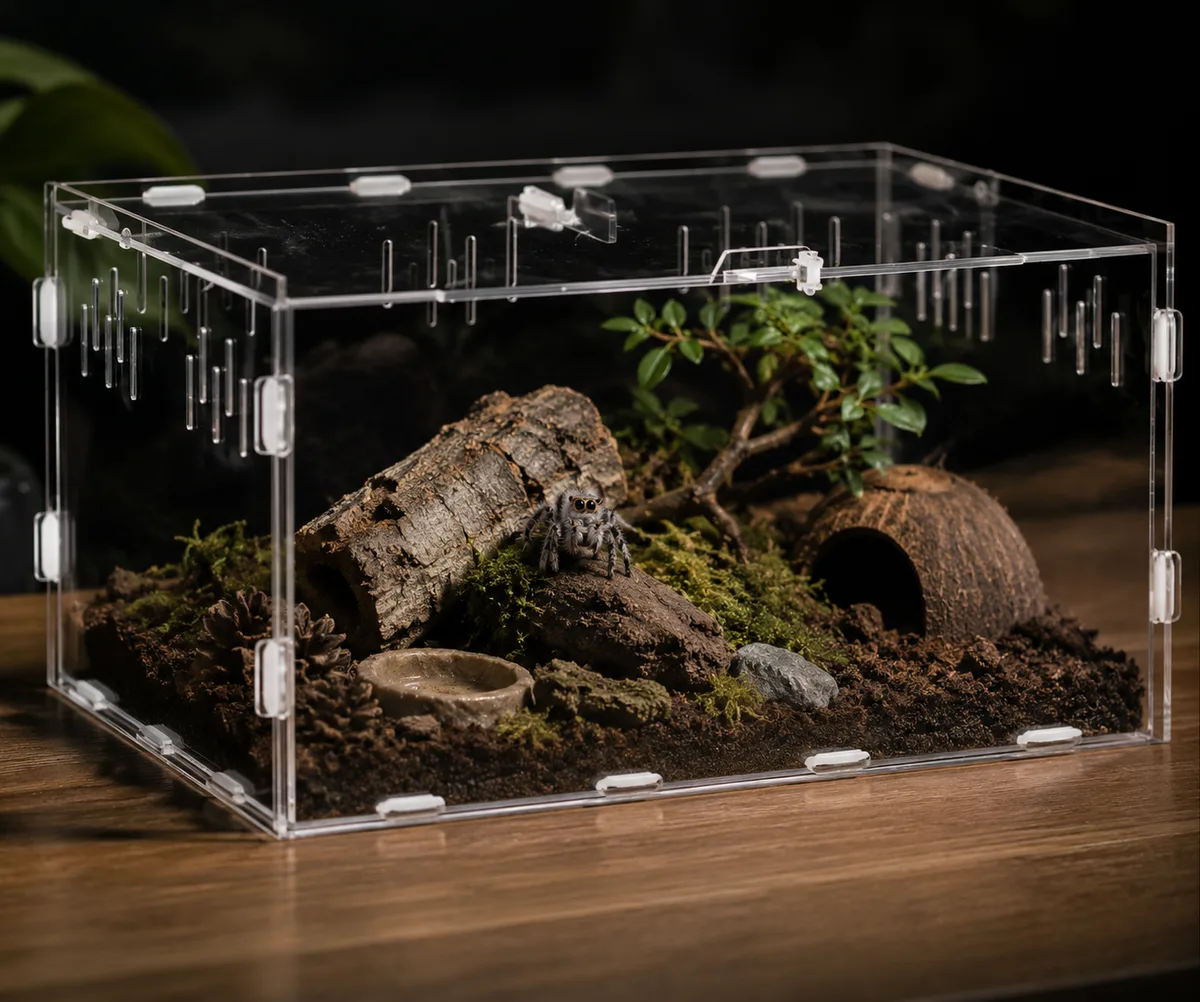
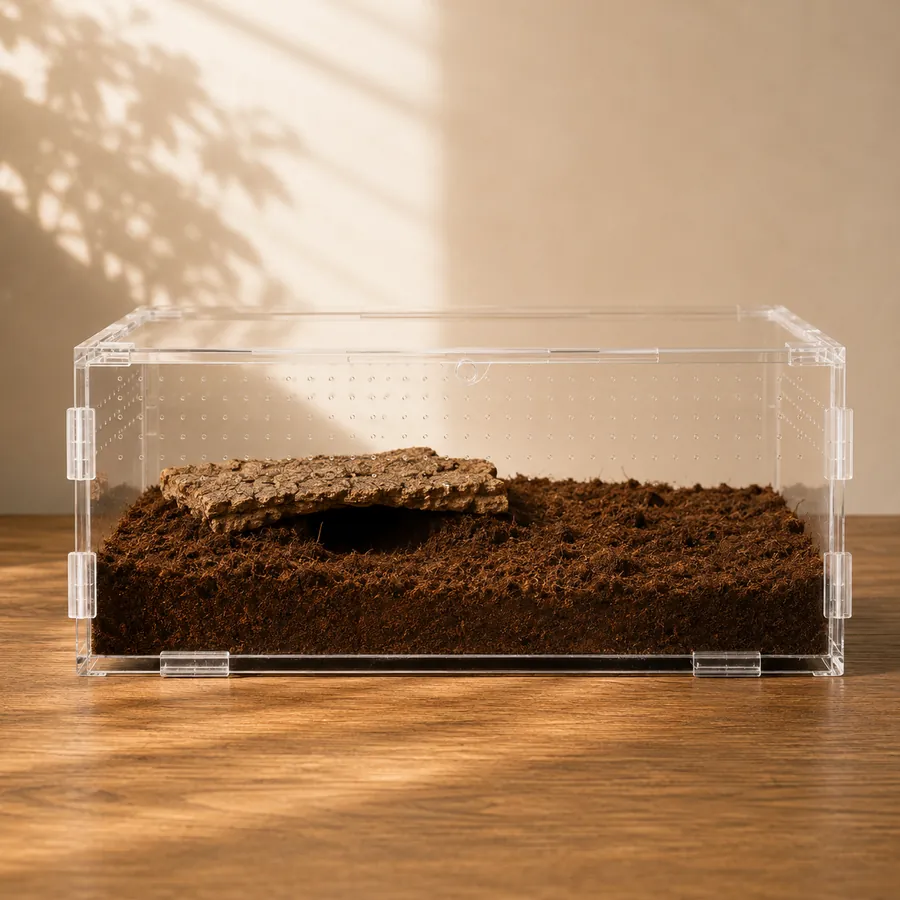
Ground-dwellers spend their lives on and under the surface. Many are opportunistic burrowers that dig retreats and wait out dry spells underground. What they want from an enclosure is floor area and depth, not height.
That is the core reason a good terrestrial tarantula enclosure is wide and low rather than tall. It gives you room to pile substrate deep, following the substrate guide, while keeping the fall distance safe. Notice the careful wording on the fall risk. I am describing a widely held keeper principle, not quoting an injury rate, because a reliable figure does not exist. The safe, well-established advice is simply to keep terrestrials low.
Arboreal tarantulas
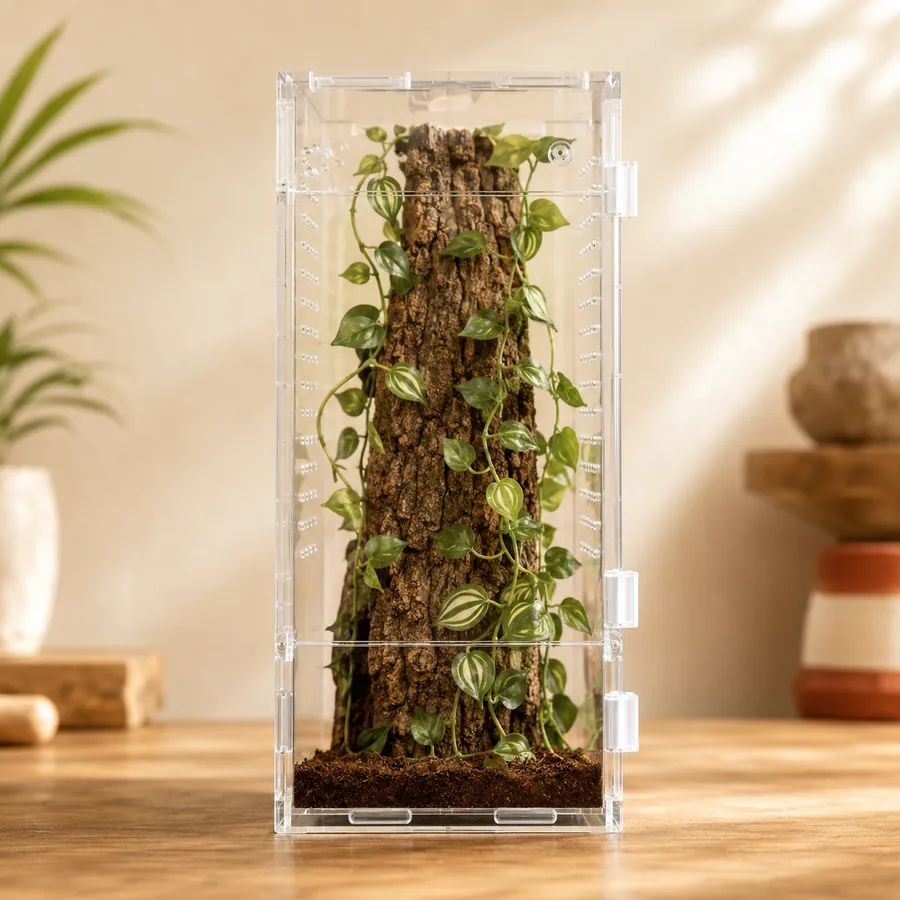
Tree-dwellers flip every priority. They live vertically, anchoring silk retreats high on bark and hunting from up top. Height is their habitat, and a wide, short box frustrates them. The classic example is the pink toe, covered in detail in the pink toe tarantula guide.
An arboreal tarantula enclosure is therefore tall, with a vertical cork slab to climb and web on, and plenty of airflow. The ventilation piece is important enough that it has its own ventilation guide, and it is one of the biggest differences in day-to-day care between the two types.
Side-by-side comparison
Here is the whole decision on one screen. Use it to sanity-check any enclosure against the lifestyle of your spider.
| Feature | Terrestrial | Arboreal |
|---|---|---|
| Where it lives | On and under the ground | Up on bark and branches |
| Enclosure shape | Wide floor, limited height | Tall, vertical |
| Substrate depth | Deep, for burrowing | Thin layer |
| Climbing surface | Optional hide, low decor | Vertical cork bark, essential |
| Height and falls | Keep low, fall risk | Height is the habitat |
| Ventilation emphasis | Cross-ventilation, balanced with damp substrate | Generous cross-ventilation |
| Example species | Many New World ground-dwellers | Pink toe (Avicularia) |
| TaranTerra fit | Acrylic Large Wide (10 x 6 x 6 in / 25 x 15 x 15 cm) | Acrylic Large Tall (6 x 6 x 10 in / 15 x 15 x 25 cm) |
From my own shelves
The fastest way I know to tell someone whether they have the right enclosure is to ask two things: how tall is it, and where does the spider sit? My terrestrials settle low and dig. My arboreals climb straight to the top and web up high. When those two behaviors do not match the enclosure shape, the enclosure is wrong, and I have never seen an exception to that on my own shelves.
Which do you have?
If you already own the spider and are not sure, watch it. A tarantula that digs, sits on the ground, and stays low is behaving as a terrestrial. One that climbs the walls, webs near the lid, and wants to be high is arboreal and is telling you it needs a taller home. Its natural range helps too: many popular ground-dwellers are New World terrestrials, while the pink toe and its relatives are arboreal.
Once you know the type, sizing is the next step, and the enclosure size by stage guide walks it from sling to adult. The general shopping criteria, ventilation, access, and a secure lid, are in how to choose a tarantula enclosure, and slings of either type start in the sling enclosure. You can browse the full range on the enclosures home page and read buyer feedback in the verified reviews. Because this is a decision you live with for a long time, it is worth getting right at the start.
documented lifespan of females in some tarantula species, so the right enclosure shape matters for years
— Encyclopaedia Britannica, 2024
Quick answers
What is the difference between arboreal and terrestrial tarantulas? Terrestrial species live on the ground and want a wide, low enclosure with deep substrate. Arboreal species live in trees and want a tall enclosure with climbing surfaces and a thin substrate layer.
Is a pink toe arboreal or terrestrial? The pink toe (Avicularia) is arboreal. It needs height, climbing surfaces, and generous ventilation.
Can I keep a terrestrial in a tall enclosure? It is not ideal. Extra height adds fall risk for a ground-dweller without any benefit. A wide, low enclosure is safer.

Adrian Costa · Tarantula keeper, 10+ yrs
Adrian has kept tarantulas for over a decade and has raised dozens of slings to adults, both terrestrial and arboreal. He builds and tests every enclosure on his own shelves before writing about it.
Free shipping · 30-day money-back guarantee · Ships in 8–10 business days